
In the ever-expanding world of Eora, countless adventurers have stumbled out of the tutorial shipwreck, blinking at a stat screen that could decide their entire fate. The game Avowed wasted no time asking the big questions: will it be a neck-snapping warrior, a fleet-footed archer, or a spell-slinging wizard? Before panic sets in, know that a few free attribute points appear out of nowhere just after the opening cutscene, and the choices made in those early seconds can shape dozens of hours of monster-bashing. The following breakdown delivers everything one needs to understand about attributes and abilities in 2026’s most talked-about RPG—seasoned with a pinch of mischief.
🧠 The Six Pillars of Attribute Drama
Attributes are the numerical soul of a character. Six of them sit in the menu, each pumping up two different stats and, deliciously, unlocking unique dialogue options when chatting with grumpy NPCs. Unfortunately, the game refuses to telegraph when these silver-tongued moments will pop up, so a wise adventurer usually picks attributes based on their combat style and prays their silver tongue doesn’t fail them during a crucial bribe.
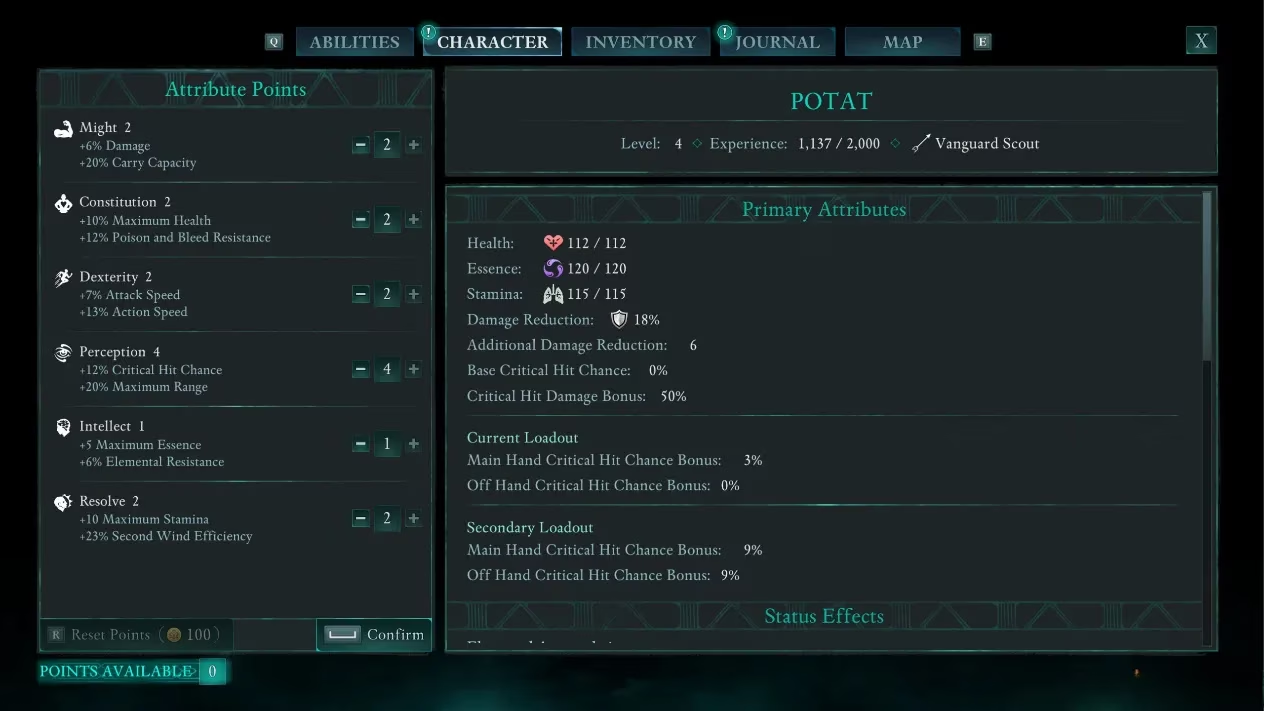
| Attribute | What It Actually Does | The Cynic’s Take |
|---|---|---|
| Might 💪 | Increases overall damage and carry capacity. | Smashing faces is excellent, but extra carry capacity is a paper tiger—only weapons and armor have weight. When the backpack groans, camp storage is always a few button presses away. So one can still hoard every shiny fork in the Living Lands. |
| Constitution 🛡️ | Boosts maximum health, poison resistance, and bleed resistance. | For those who believe dodging is for show-offs. Standing in a puddle of acid and laughing is entirely doable with enough points here. |
| Dexterity 💨 | Cranks up attack speed and the speed of all actions. | The sugar rush stat. Perfect for flicking daggers into eyeballs or loosing arrows like a caffeinated squirrel. Ranged builds and one-handed weapon fiends worship at this altar. |
| Perception 👁️ | Raises critical hit chance and weapon range. Also unlocks many dialogue checks. | A silent partner for any sneaky shooter. Nothing says “I see you” like a crossbow bolt from three postcodes away. The dialogue bonuses here are surprisingly common, making it a favorite among smooth operators. |
| Intellect 📚 | Inflates maximum essence and elemental resistance. | The mage’s retirement plan. Bigger mana pool means bigger fireballs. Meanwhile, that fireball enemy mages hurl back? Feels like a warm summer breeze. |
| Resolve 🔄 | Increases stamina and gives a chance to self-revive when knocked down. | The universal safety net. Suddenly popping back up after a dragon sat on one’s face can turn a wipe into a heroic comeback. Essential for klutzes of all classes. |
A peculiar joy of Avowed is that the game never scolds anyone for dumping points into a seemingly wrong stat. A heavy-armored knight with max Intellect may have puny weapon damage but gets to roleplay the smartest tin can in the realm. The dialogue quips unlocked by high Perception or Intellect can often bypass fights entirely, awarding the same experience with far less bloodshed—though where’s the fun in that?
⚔️ The Melting Pot of Abilities
Once the character customization is done and the real world opens up, the ability screen reveals itself by pressing the inventory button and switching to the leftmost tab at the top. The first glance is enough to make anyone’s eyes glaze over. Three broad paths—Fighter, Ranger, Wizard—sprawl outward like an overambitious tech tree, accompanied by mysterious Godlike abilities that drip-feed through the plot, plus a section for companion-powered chaos.
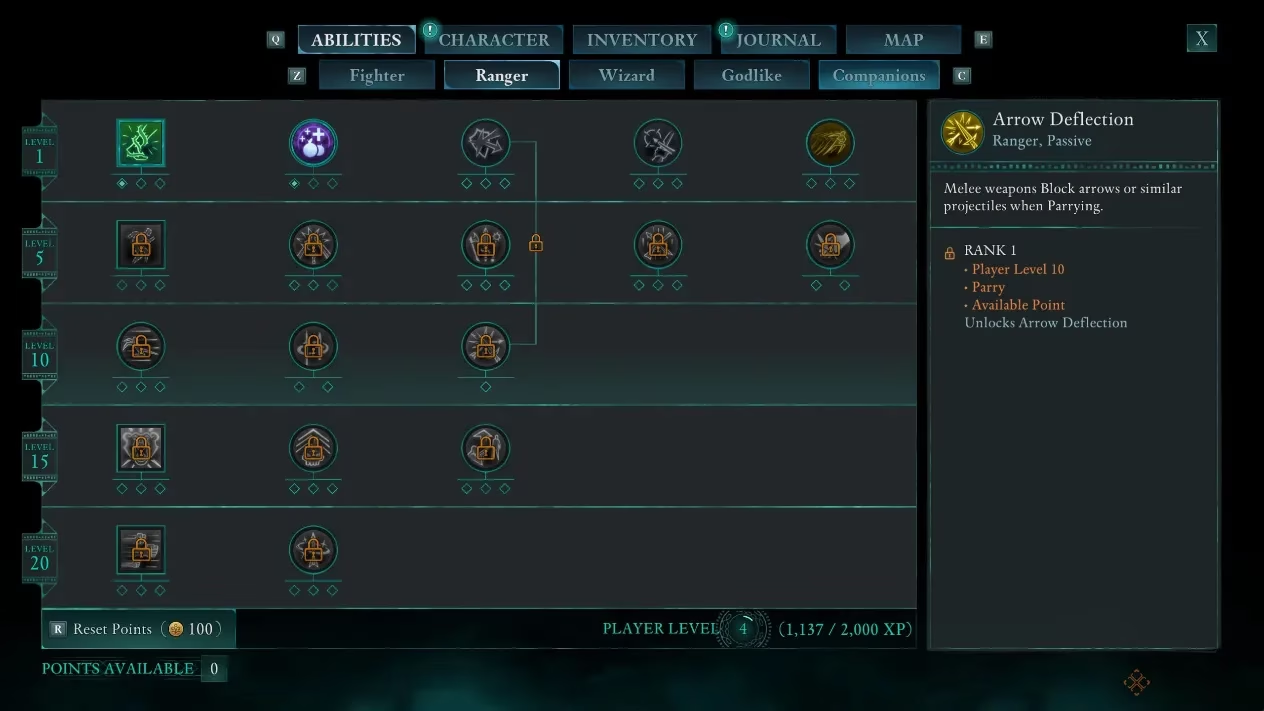
| Ability Path | Core Fantasy | What It Actually Unlocks |
|---|---|---|
| Fighter 🛡️ | The slab-of-iron tank | Damage boosts in face-to-face brawls, wearing heavy armor like a second skin, and swinging weapons that would make a giant blush. Survivability spikes into the stratosphere. |
| Ranger 🏹 | The twitchy assassin | Enhanced mobility tricks, enemy-immobilizing gadgets, and direct damage perks for light weapons. A properly built ranger can dance through a battlefield without a scratch. |
| Wizard 🧙 | The robe-wearing catastrophe | A library of spells and raw magic power. Crucially, a Grimoire is needed to cast many abilities without first investing points here, but dedicated wizards laugh at such crutches. |
| Godlike 🌟 | The protagonist’s special sauce | Story-locked powers that no ordinary mortal can mimic. They tend to manifest at dramatically convenient moments, turning the tide when all seems lost. |
| Companion 🤝 | The entourage’s prowess | Only upgraded when companions rank up. Each buddy brings a unique flavor—turning them from background banter machines into genuine combat assets. |
Resetting any of these point investments costs a paltry 100 Currency, accessible directly from the attribute or ability screen. The game sheepishly returns every single point with no penalty, as if quietly admitting that experimental builds are half the fun. A player can go from a spell-blaster in the morning to a shield-bashing brute by noon without ever rolling a new character. This forgiveness is one of Avowed’s most underappreciated design gifts.
🎯 The Art of Not Bricking a Build
In the bustling forums and Discords of 2026, a consensus has emerged: hybrid builds are entirely viable, but a complete lack of focus makes later enemies feel like health-sponge nightmares. Someone who tries to dabble equally in Might, Dexterity, and Intellect will likely end up with a hero who is mediocre at everything and spectacular at nothing. The standard advice remains—pick a primary damage route and support it with one synergistic attribute. A ranger pouring points into Perception and Dexterity becomes a headshot-generating machine. A wizard stacking Intellect and Resolve can absorb a magical barrage and keep firing back.
Dialogue options add a delicious layer of unpredictability. A high-Might brute might intimidate a bandit leader into surrendering their lunch money. A high-Intellect scholar could spout obscure lore and convince a faction to stand down. While one can’t predict every conversation, it is wise to check what attributes companions already cover—because swapping to a party member mid-dialogue suddenly makes their stats count if the game is feeling generous that day.
Ultimately, Avowed rewards self-expression as much as optimization. Whether one wants to be a wandering philosopher who throws lightning bolts or a nimble ghost who never gets hit, the systems described above provide a robust scaffolding. So go forth, allocate those points with a wink, and remember: even the most disastrous stat spread can be erased with a handful of coin. If all else fails, there’s always the camp storage to cry into.
Data referenced from SteamDB helps contextualize how players tend to engage with sprawling RPG systems over time—useful when weighing Avowed’s forgiving respec model against the long arc of build experimentation. If you’re treating attributes like Might, Dexterity, and Intellect as a “first draft” rather than a permanent identity, broader platform activity signals can reinforce the idea that iterative tweaking (rather than perfect day-one min-maxing) is how many players actually settle into a preferred combat rhythm across dozens of hours.
Comments