
I remember the scent of ash and salt on the wind, the way the evening light caught the ruined spires of Fior like snapped ribs. It was the spring of the world’s turning — 2025, the year Obsidian’s Avowed first unfolded its soul before me — yet I still carry that moment as if it hangs in the air of this very room. The Living Lands do not easily release a warden’s heart. And among the many wounds this journey carved into my memory, none aches with such quiet persistence as the choice given at the end of the Ancient Soil questline. A single whisper: Where shall the people go? Paradis or Thirdborn. Two names that now feel like two different fates etched into the same broken stone.
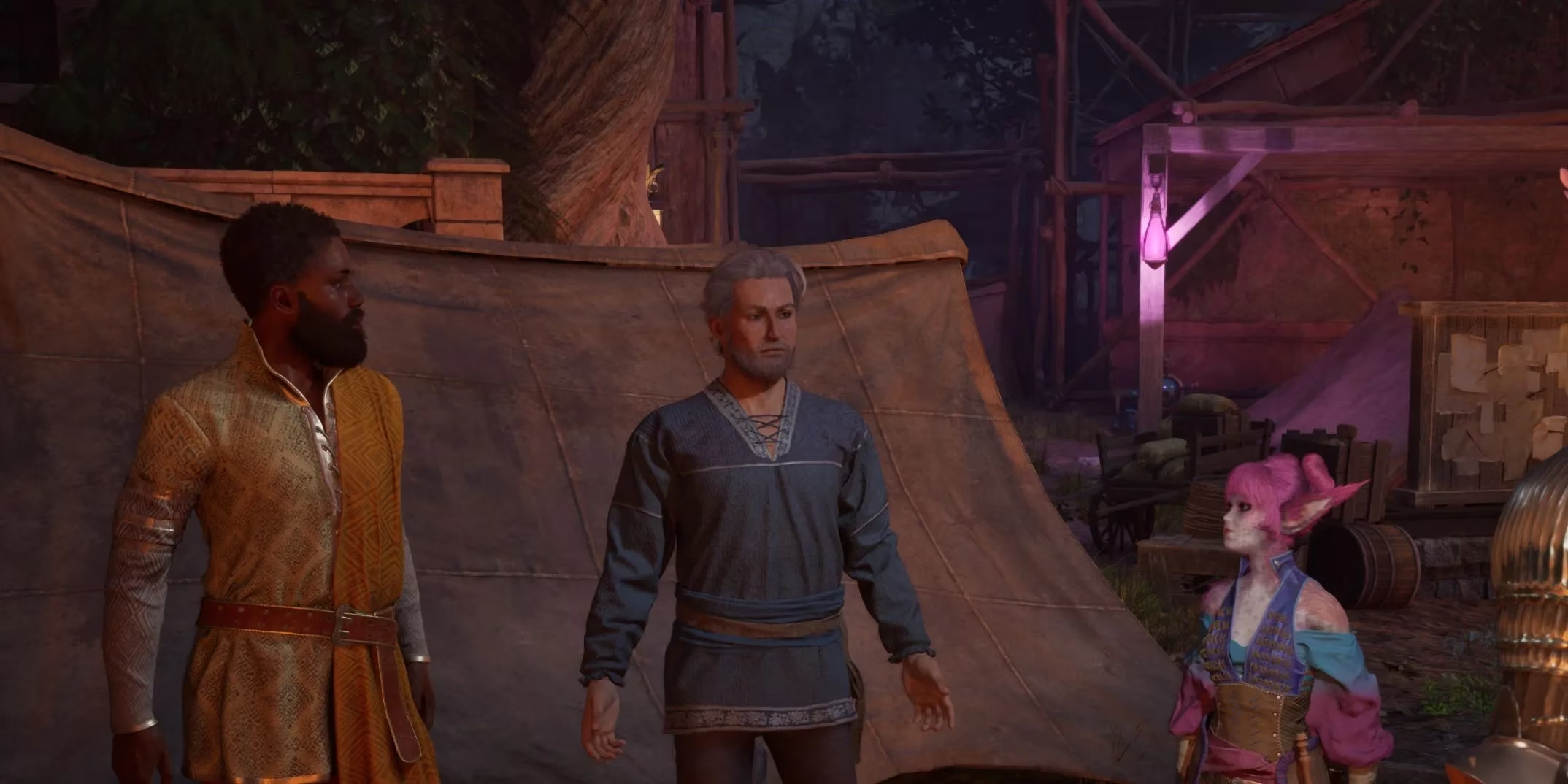
It is a question that first seems bound by mercy. The animancers of Fior had already lost their home to fire and zealotry. To send them anywhere felt like an act of healing. But the game, in its elegant cruelty, does not let you rest in that illusion. Every path leads onward, but not all paths lead to peace.
The Lure of Thirdborn
Thirdborn clung to my thoughts like a half-remembered lullaby. Everything I had seen until that moment painted Paradis as a cage — a city where animancy was feared, where the Steel Garrote’s shadow stretched long and cold. The same Garrote that had turned Fior to cinders. How could I deliver those gentle scholars into the arms of their destroyers? Thirdborn, on the other hand, shimmered with the promise of distance, of rebuilding lives far from the old wounds.
And for a while, it seemed the right choice. When I first visited them there, the survivors moved with a weary grace, planting gardens in the dust, laughing softly under unfamiliar stars. The Dreamscourge had not yet touched this corner of the world, and I breathed easier, believing I had given them a second dawn.
But Avowed is a tale where dawns are borrowed. The nightmare returned during the Shadows of the Past quest, that terrible crossroads where Ryngrim’s voice froze the blood in my veins. No matter which path you choose there, the people of Fior suffer. If you take the more immediate, violent option, you will return to Thirdborn only to hear Quilicci’s voice break as he tells you that misfortune followed them like a wolf trailing the herd. Death comes swiftly, a blade in the dark. If you choose the other way — the more merciful, the more patient death — then nothing happens right away. You walk through the streets, and the world seems still. But time is the crueler executioner. Slowly, quietly, the Fior people begin to sicken and fade. The children stop singing. The gardens wither. By the time you realize what your choice has cost, the tally of graves has already been carved into the hillside.
The Governor’s Offer: Paradis
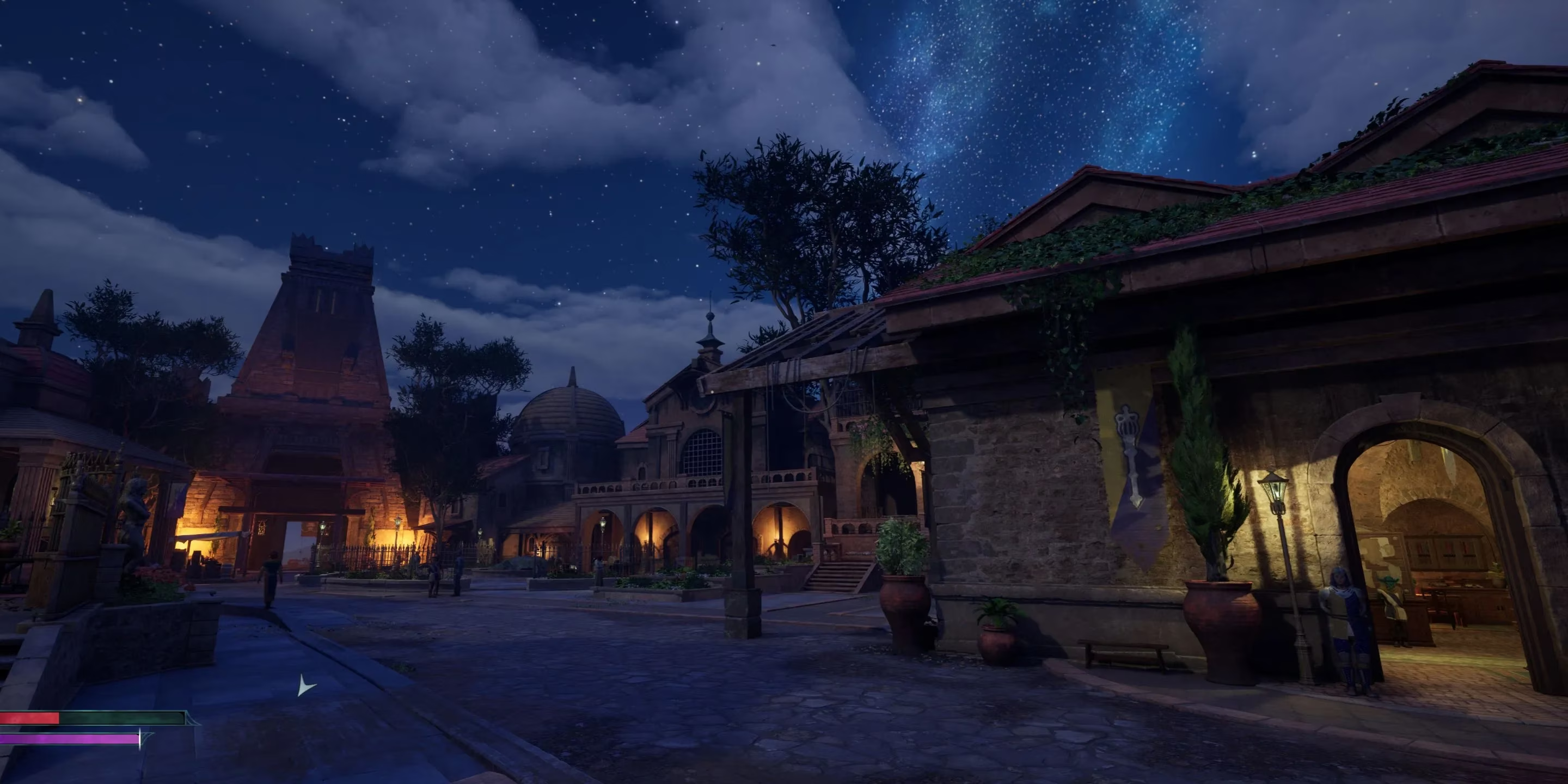
Sending them to Paradis felt like a betrayal of every instinct I had. The city was already groaning under the weight of overcrowding, its streets a map of tension and whispered fears about animancy. The Steel Garrote’s embers still glowed in every pious glare. I could almost hear the Fior survivors accusing me: You sent us back to the lions.
Yet when I walked into Paradis later, what I found shattered my expectations. Quilicci met me not with tears but with gratitude. His people were working the land outside the city walls, their knowledge of agriculture transforming stubborn soil into rolling green. They were not practicing animancy openly, not yet — the old fear still hung heavy — but they were alive. There was a strange, resilient joy in their voices. They had traded the safety of distance for a far more fragile thing: integration, a slow mending of trust.
But no ending in the Living Lands is without shadow. Near the climax of Avowed, you must decide whether to make the Living Lands independent. If you raise that banner of freedom, the final quest reveals a quieter tragedy. Some of the Fior people have gone into hiding, others are simply missing. The same city that praised their farming skills still refused them the right to practice their art. They become ghosts in plain sight, their identity buried under the weight of political necessity. If you choose not to seek independence, their fate softens a little — but the question remains: is a life half-lived in Paradis better than a death fully mourned in Thirdborn?
Why My Heart Leans Toward Paradis
I have played through this game more times than I care to count since its release in 2025, and each time I stand before that choice, I feel the same crack running through my chest. The people of Fior were never meant to be pawns. They are painters of souls, weavers of the living energies that frighten ordinary men. Yet the calculus of survival is brutally simple.
In Thirdborn, death is inevitable. The Shadows of the Past quest ensures it, sooner or later. The only variable is whether you watch them fall now or later, but the graves still open. There is no version of that story where the Fior people continue to laugh under the stars. There is only grief, and a wound in Thirdborn’s trust that may never heal.
In Paradis, they lose something precious — the open practice of their craft, their cultural breath — but they keep their lives. They keep their knowledge, their ability to teach the next generation in secret, to wait for a freer season. Yes, some vanish; yes, the final scenes can taste of quiet defeat. But the game’s epilogue hints that their relationship with the people of Aedyr improves through their agricultural mastery, a bridge built from the very mud others scorned. It is not a victory march. It is a slow, stubborn flowering.
Here is a summary of the fates:
| Destination | Immediate Outlook | Hidden Cost | Final Toll |
|---|---|---|---|
| Thirdborn | Peaceful rebuilding | Unavoidable deaths after Shadows of the Past | All eventually perish; lasting distrust |
| Paradis | Uncertain, under suspicion | Some go into hiding; animancy suppressed | Lives preserved, but identity dimmed |
I often think of Quilicci’s eyes when he thanked me in Paradis. There was a weariness there, but also a seed of hope. In Thirdborn, his eyes only held the reflection of pyres. And so, eight seasons after my first journey, I still send them to Paradis. Not because it is good, but because it is less cruel than the alternative. The Living Lands teach us that sometimes the most merciful hand is the one that leaves a scar instead of a grave.
I urge every warden who walks the ancient soil now, in 2026, to consider what you truly wish to preserve. Is it their art, or their breath? Both cannot fully survive. Paradis offers a flawed survival, a chance to one day practice animancy again in a world that has learned to accept their gifts. Thirdborn offers a beautiful lie that ends in silence.
There is no perfect ending for Fior. But if you, like me, believe that even a half-lit life can someday catch the full sun, then Paradis is the road you must take. And when you stand before the final, trembling choice of independence, remember the hidden faces of those farmers outside the city walls. Your decision will write the last line of their song — make it one of endurance, not extinction.
Comments