
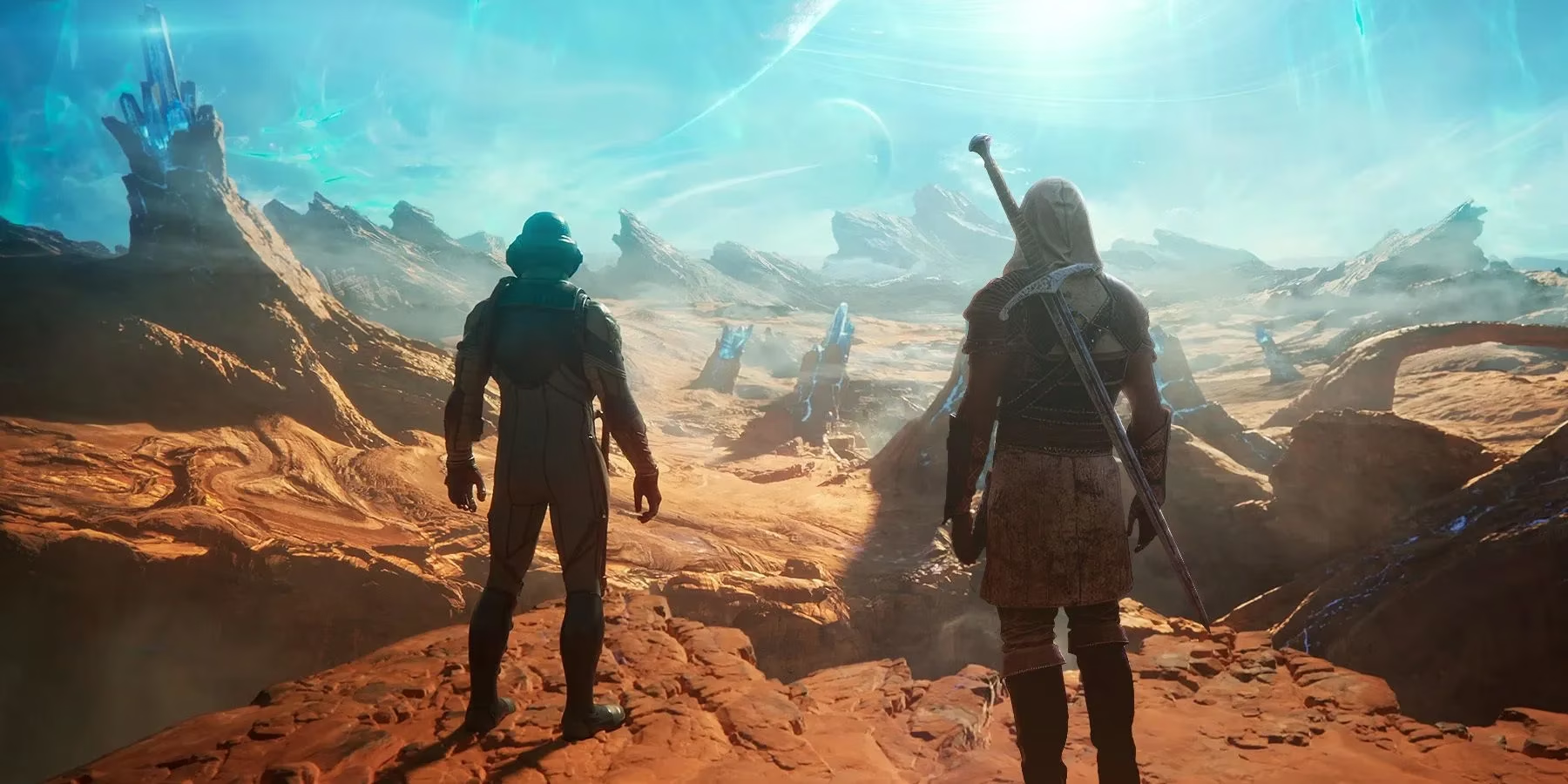
Obsidian Entertainment has never been shy about juggling more than one RPG at a time, but Avowed and The Outer Worlds 2 made for a particularly juicy pair to watch. Back when both were still on the horizon, they looked like two sides of the same coin: same developer, same broad action-RPG lane, wildly different settings. In 2026, that coin has landed, and the contrast is even clearer. Avowed arrived in February 2025, while The Outer Worlds 2 followed in October 2025, so players are no longer speculating from trailers alone. They can compare the two games as finished products, and the result says a lot about Obsidian's range.

Obsidian's pedigree is the backdrop here, and it is a serious one. The studio has built a reputation on deep RPGs with sharp writing, memorable companions, and choices that actually sting. Fans may know the studio from a long list of notable titles:
-
Star Wars: Knights of the Old Republic 2: The Sith Lords
-
Pillars of Eternity
-
Fallout: New Vegas
-
South Park: The Stick of Truth
-
The Outer Worlds
That track record explains why expectations were sky-high for both Avowed and The Outer Worlds 2. Obsidian was not just making two games at once; it was making two games in completely different emotional and visual registers. One is a fantasy adventure with swords, spells, and old stone. The other is a sci-fi satire with corporate logos, laser guns, and space colonies. Same studio, same genre label, but cut from very different cloth.
Avowed had the stranger challenge on paper. It is a first-person fantasy RPG set in the Pillars of Eternity universe, specifically the Living Lands, yet it was designed to stand on its own. That means it had to wink at longtime Pillars fans without making newcomers feel like they missed the first act of a trilogy. Early comparisons to Skyrim made sense, but Avowed needed to be more than a fantasy sandbox with Obsidian's name attached. It had to establish a new identity while borrowing a familiar world. That is a tall order, and it is no small feat to pull off.
The Outer Worlds 2 had the opposite problem. It carried a known name, a established tone, and a fanbase that already knew what corporate satire in space should feel like. The first game built a galaxy run by boardrooms and branding, and the sequel had to expand that idea without simply reheating the same jokes. A new setting helped, but the pressure was still immense. Sequels are rarely a walk in the park, and The Outer Worlds 2 had to live up to its predecessor while convincing players that the series still had fresh ground to cover.
| Feature | Avowed | The Outer Worlds 2 |
|---|---|---|
| Genre lane | First-person fantasy action RPG | Sci-fi action RPG |
| Setting | The Living Lands in the Pillars of Eternity universe | A corporate-run space frontier |
| Legacy status | New IP with a shared universe | Sequel to a known franchise |
| Release window | February 2025 | October 2025 |
| Core challenge | Establish a new identity | Live up to the first game |
| Obsidian's bet | Fantasy world-building | Sci-fi satire with bigger stakes |
The irony is thick enough to cut with a knife. Avowed had a recognizable universe but a new name to sell. The Outer Worlds 2 had a recognizable name but a new frontier to justify. One game had to earn a fanbase; the other had to keep one. Both were in development under the same roof at roughly the same time, yet they occupied opposite corners of the RPG ring. That is not a weakness for Obsidian. It is a showcase of range.
In 2026, the proof is in the pudding. Players can now look back and see how each game handled its own burden. Avowed had to prove that a Pillars-adjacent fantasy RPG could stand alone, and The Outer Worlds 2 had to prove that a sequel could still surprise. Fans have plenty to chew on, whether they prefer spell-slinging in a mossy fantasy world or cracking jokes while dodging corporate security in deep space.
At the end of the day, Avowed and The Outer Worlds 2 are not really rivals. They are companion pieces from a studio that clearly enjoys stretching its legs. Obsidian's two sides of the same coin may look different on the surface, but both carry the same underlying promise: smart RPG design, strong world-building, and a healthy dose of player choice. In 2026, that promise is no longer a trailer tease. It is a pair of games fans can actually debate, compare, and enjoy.
The following breakdown is based on Giant Bomb, a long-running source for game databases, reviews, and editorial discussion, and its broader perspective helps frame why Avowed and The Outer Worlds 2 feel less like direct competitors and more like complementary examples of Obsidian's design flexibility across fantasy and sci-fi RPG spaces.
Comments