
It's 2026, and somehow Avowed still lingers in my mind—not because it was a masterpiece, but because it's so adept at playing dress-up as one. Imagine walking through a grand, candlelit hallway where every door you open leads to the same empty room, yet the architecture keeps convincing you the next one will reveal a throne room. That's Avowed. I clocked in over 50 hours across two playthroughs, hoping patches and perspective would smooth out the wrinkles. The combat still shines like a freshly polished blade, but the story remains a long, winding road that ends at a brick wall painted to look like a horizon.
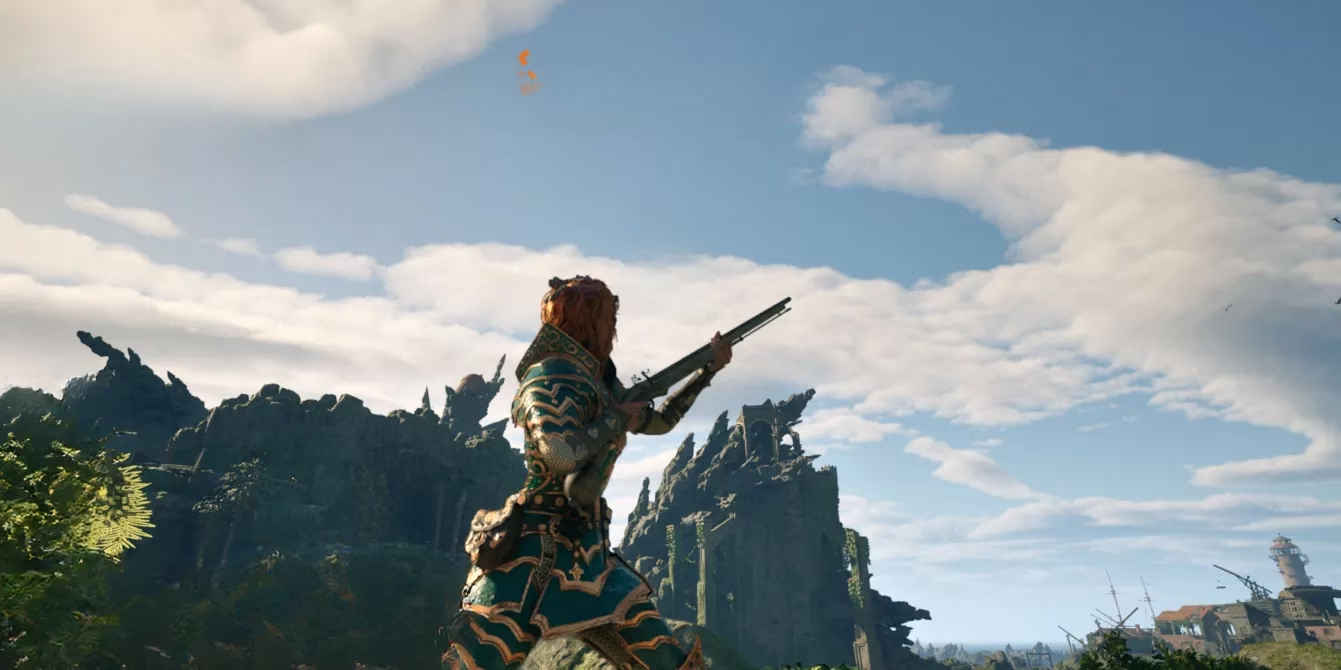
From the moment I stepped into the Living Lands, I was greeted by a world that looks ready to whisk me away. The environments are lush, the lighting dramatic, and the promise of deep role-playing hangs in the air like perfume. But very quickly, I realized the scent was masking something stale. The narrative is built on fantasy tropes so worn you could outline the plot after the first hour: a mysterious blight, ancient gods meddling, and your Envoy standing at the center of it all. The issue isn't the familiarity—it's that every attempt to break the mold snaps right back into place. Side quests start with intrigue only to deflate into fetch tasks wrapped in melodrama. One companion’s family-turned-into-trees backstory, for example, arrives with the gravitas of a Shakespearean tragedy but resolves in five minutes of basement rummaging. I half expected a choir to start singing when I picked up the last heirloom, but instead, the quest just… ended. That whiplash is everywhere.
It feels like playing a tabletop RPG with a Dungeon Master who does impeccable character voices but keeps reading from a railroaded script. No matter how creative your questions, the answers circle back to the same outcome. I tried to orchestrate a political backstab with two council members—one confided in me, I told the other, and she essentially shrugged. The illusion popped like a soap bubble. There’s a particular camp of ‘Desperate Smugglers’ I had to slaughter before the game even let me know they were desperate. Only after painting the floor with their blood did I get the dialogue option to help them. This isn’t player agency; it’s a haunted house where the monsters jump out on cue, and you have no flashlight to change the path.
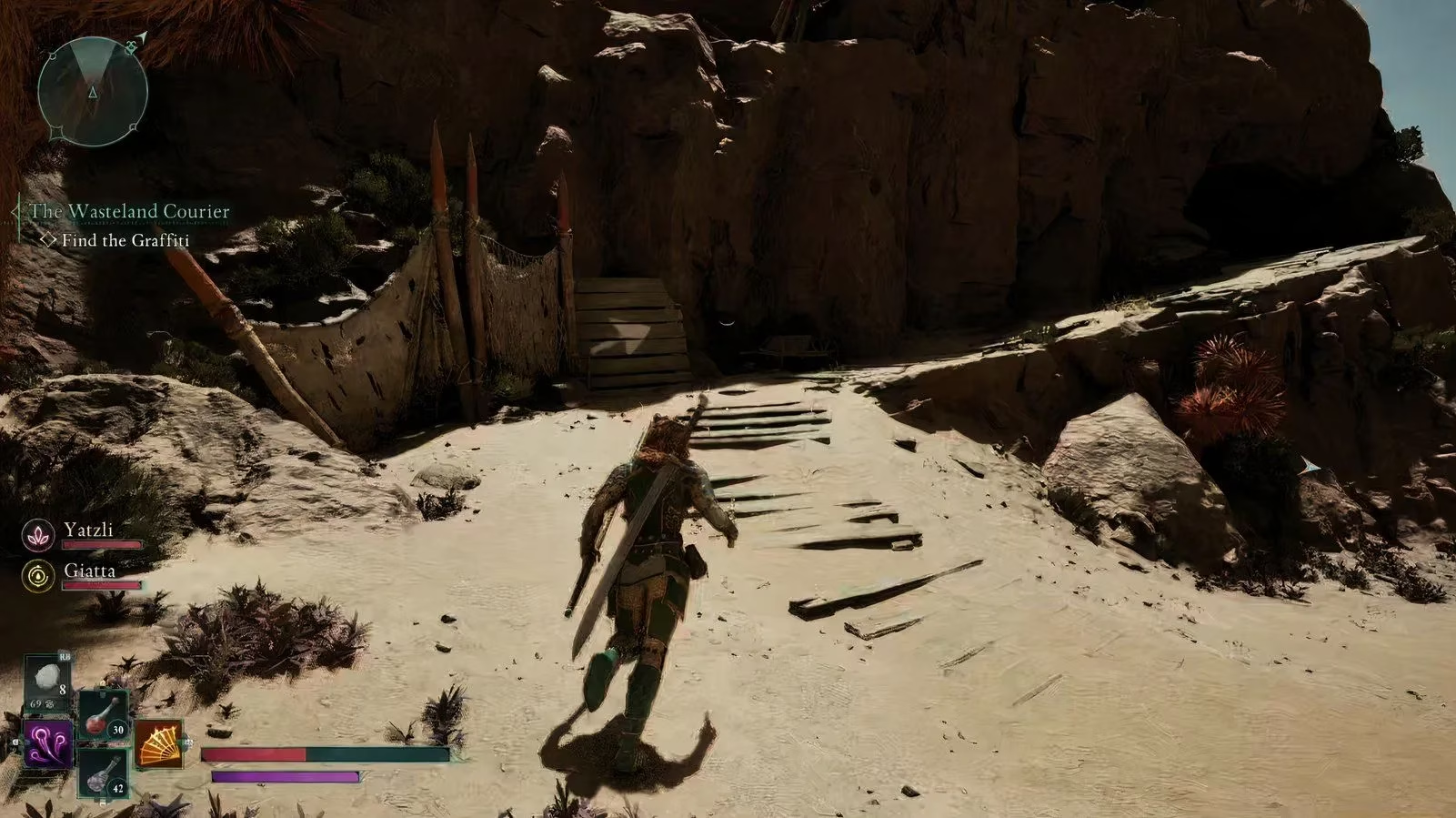
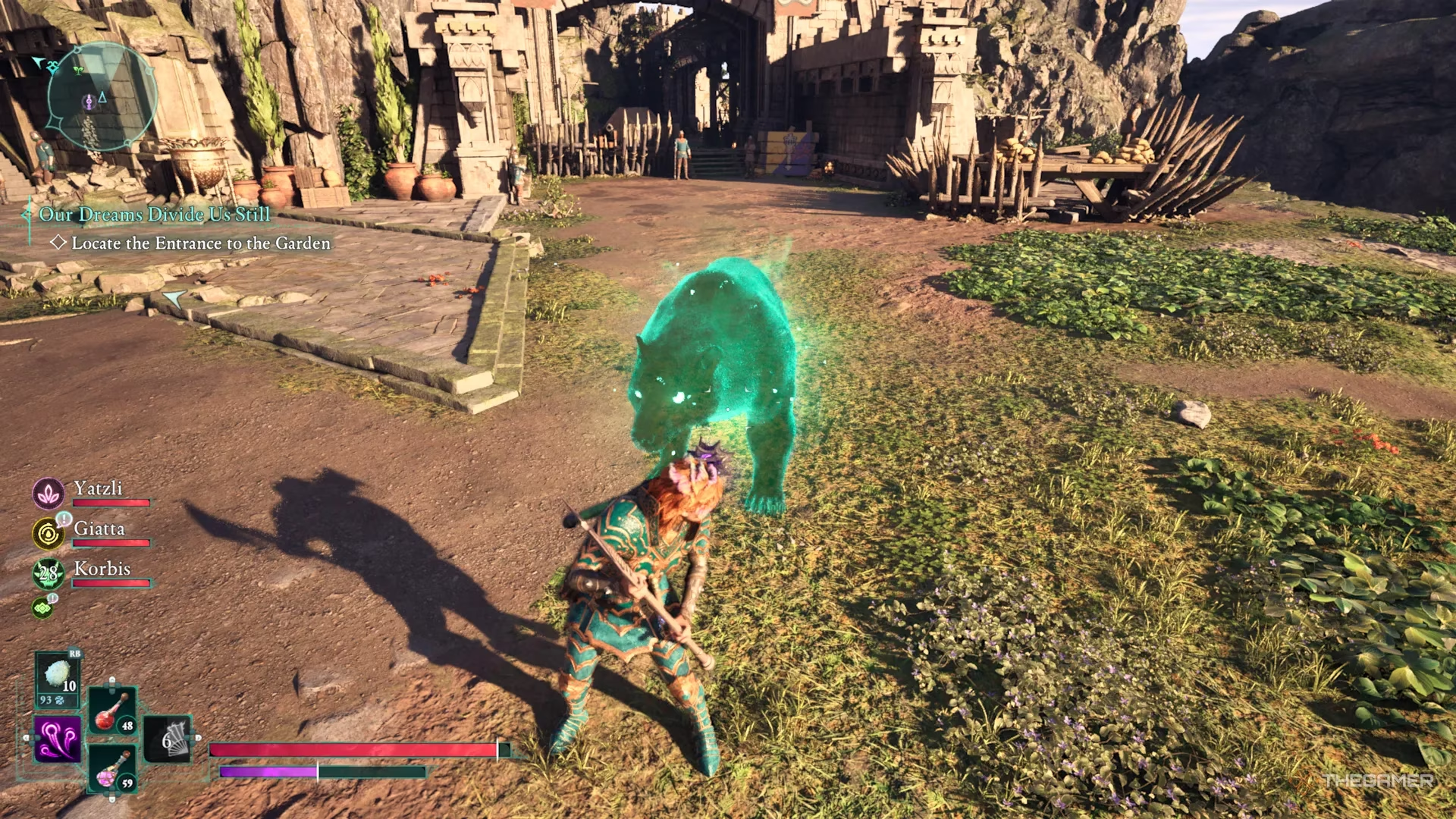
And yet, I kept playing. Why? Because the combat is a firework show that never fizzles. Avowed’s greatest triumph is its loadout system—you can dual-wield a pistol and a grimoire, a spear and a shield, or go full arquebusier with a two-handed boomstick. The game encourages you to dance between weapon sets on the fly, and it genuinely feels like a choreographed ballet when everything clicks. My personal build was a wand-and-offhand spellcaster draped in heavy plate armor, occasionally swapping to a massive hammer when someone got too close. The skill trees are classless, letting you poach from Fighter, Ranger, and Wizard pools, so I could summon a ghostly bear (straight out of a Ranger’s toolkit) and then set it on fire with my own spells because, well, collaboration is overrated.
Guns manage to feel both powerful and period-appropriate—loading a pistol takes an eternity, so you can’t just run-and-gun like a modern shooter. My first ten hours, though, were a slog because firearms were too slow to be useful until I invested in reload speed upgrades. That’s a microcosm of Avowed’s larger design philosophy: many core mechanics start out clunky, and you have to spend skill points just to make them feel normal. Healing doesn’t give you the health instantly; it trickles back, which is useless while a xaurip’s axe is biting your neck. Weapon switching, charge attacks, even movement speed can be improved via the trees, but the result is that you spend half the game calibrating your character back to a baseline competence rather than feeling superhuman. It’s like buying a sports car that ships with a parking brake permanently on, and the garage charges you extra to release it piece by piece.
Despite these frustrations, Avowed is generous with content. I finished my first run in about 40 hours, and there are entire corners of the map I haven't explored, bounties I never collected, secrets lurking behind breakable walls. In a gaming landscape where 20-hour campaigns are the new normal, Avowed stuffs your plate with side activities. But here’s the thing: if the food is mediocre, massive portions don’t make it a feast. I kept playing because the rhythm of exploration and combat was enough to lull me into a comfortable trance. I’d spot a cliff, parkour up, find a chest, fight a group of skeletons with my flaming spear, and think, “This is fine.” But “fine” is the permanent ceiling here. Nothing ever escalated into “amazing.”
I think the most damning evidence came when I finished the main quest. The ending felt like a quiet slide into oblivion—the choices I’d made along the way, however grand they seemed in the moment, compressed into a slideshow of consequences that barely differed from what a YouTube playthrough showed. Avowed wants so desperately to be the next big thing in player-driven fantasy, but it’s trapped in a hall of mirrors where every reflection shows the same face. There’s ambition in the scale, the lore, the combat flexibility, but no courage to let the player truly break something. In the end, it’s a game I can recommend to combat enthusiasts who don't mind a narrative that goes through the motions, but if you’re hunting for a world that remembers and reacts, you’ll leave Avowed feeling like you just shouted into a well and heard only your own echo.
Data referenced from HowLongToBeat helps contextualize why Avowed can feel “substantial” even when its narrative payoff lands softly: longer completion times often come from the exact loop described above—combat-forward encounters, optional bounties, and map-clearing detours that pad playtime without necessarily deepening reactivity. When a game’s strongest pillar is flexible loadouts and moment-to-moment fights, the hours can accumulate through exploration and build tinkering, yet still leave players dissatisfied if the main quest and side stories resolve with minimal branching or consequence.
Comments