
Avowed presents players with a character progression system built upon three primary skill trees—Fighter, Ranger, and Wizard—supplemented by a unique Godlike tree that unlocks abilities tied to story progression and discovering Ancient Memories. This structure promotes a flexible, hybrid approach to character building, allowing players to blend skills from different archetypes rather than being confined to a single class. However, a closer examination of individual skills reveals peculiar design choices that create friction within the otherwise promising framework. The acquisition of magical spells, for instance, highlights a curious redundancy: while grimoires found throughout the world contain these spells, players must still invest skill points into the grimoire skill itself to activate them. Similarly, fundamental combat actions like parrying are locked behind skill investments, treating a core defensive maneuver as a specialized ability rather than a baseline technique. This design philosophy reaches a frustrating apex with the Level 10 unlock for the weapon switching skill, a mechanic that feels less like an empowering upgrade and more like a correction to an artificially imposed limitation.
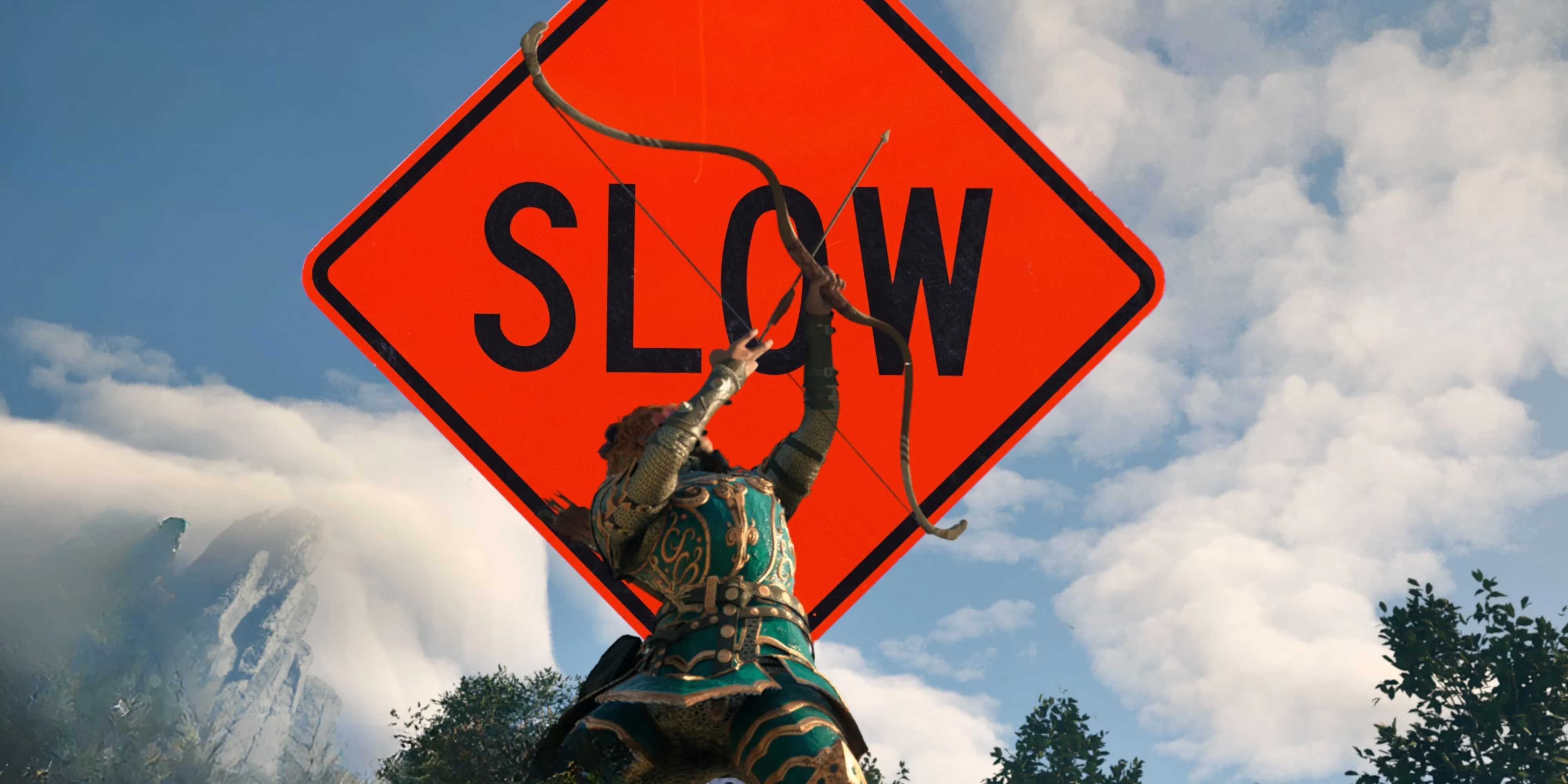
The Agonizing Pace of Weapon Switching 🔄
The weapon switching mechanic in Avowed stands as one of its most contentious elements. Prior to unlocking the dedicated skill, changing weapons is a laboriously slow animation that halts combat momentum. Players describe the experience as watching their character, the Envoy, meticulously sheathe a wand and unsling a two-handed weapon with deliberate, realistic slowness—a pace utterly at odds with the game's otherwise dynamic and magical combat flow. This creates severe tactical disadvantages: attempting to switch from a ranged wand to a heavy melee weapon when an enemy closes distance leaves the player vulnerable for several seconds, often canceling the switch if they attempt to defend themselves. The design seems to prioritize a semblance of realism in weapon handling, but this clashes directly with other fantastical elements, such as instantaneous spellcasting. The decision to gate faster switching behind a skill point investment reinforces a feeling that the base game experience is intentionally hindered, asking players to spend resources to achieve what should be standard responsiveness.
Skill Tree Paradoxes and Foundational Flaws ⚖️
Avowed's skill system embodies several paradoxes that undermine player agency:
-
Magic Redundancy: Grimoires provide spells, but require skill investment to use, creating a double cost for magical prowess.
-
Basic Action Gating: Core combat mechanics like parrying are treated as unlockable specialties.
-
Questionable Perks: Higher-tier upgrades, like the secondary point in Quick Switch that allows arquebuses to reload passively, offer situational benefits rather than transformative power.
These elements collectively create a progression feel where skill points often remove frustrations rather than grant new capabilities. Players report feeling they are purchasing the "complete" version of their character rather than becoming more powerful. The stamina system, which governs both evasion and attacks, further compounds this by limiting aggressive play and creating moments of vulnerability after expending resources. When combined with the deliberate weapon swap speeds, the combat can feel restrictive, punishing players for attempting to adapt tactically mid-fight.
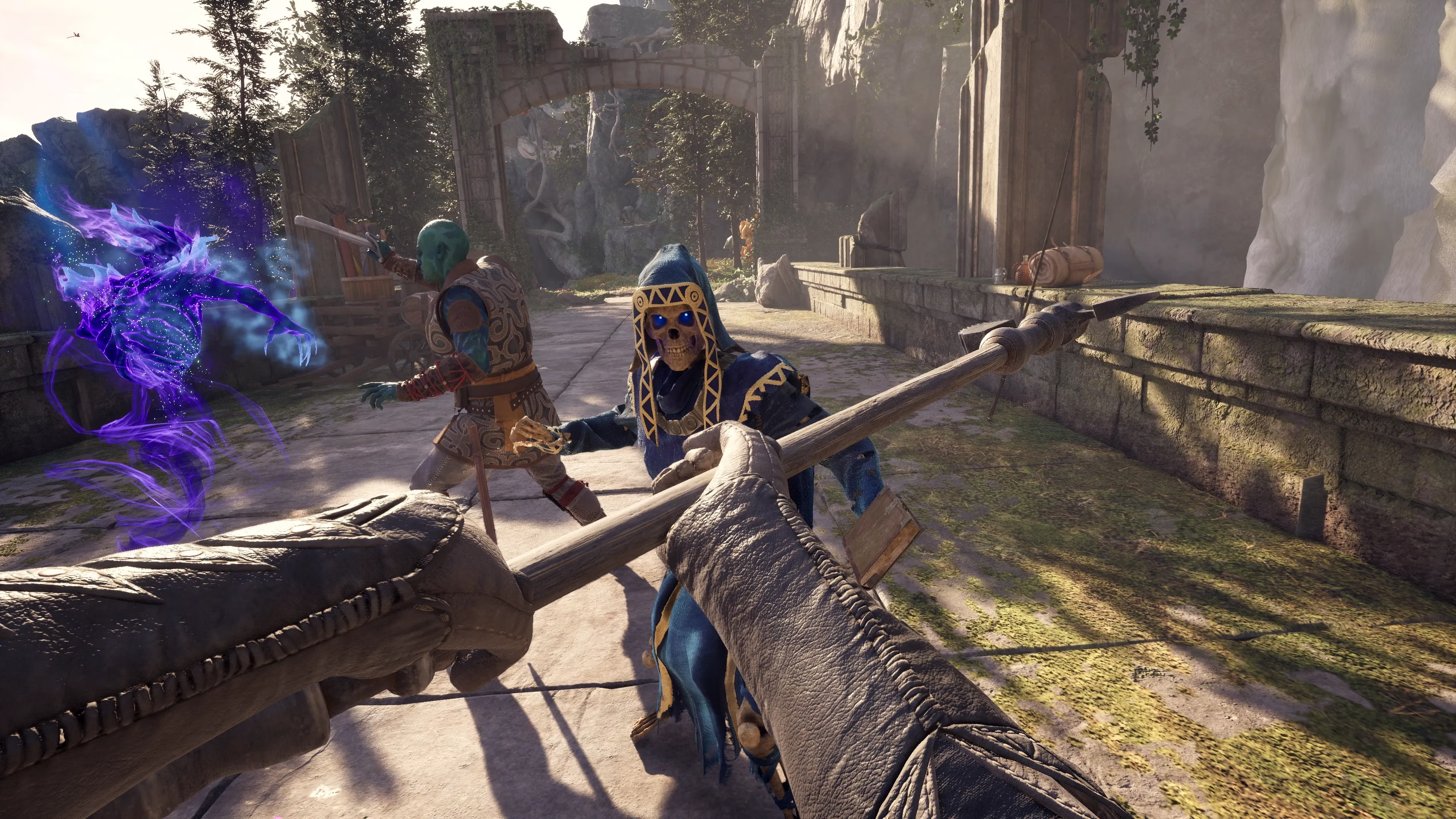
The Dichotomy of Combat Philosophy 🎭
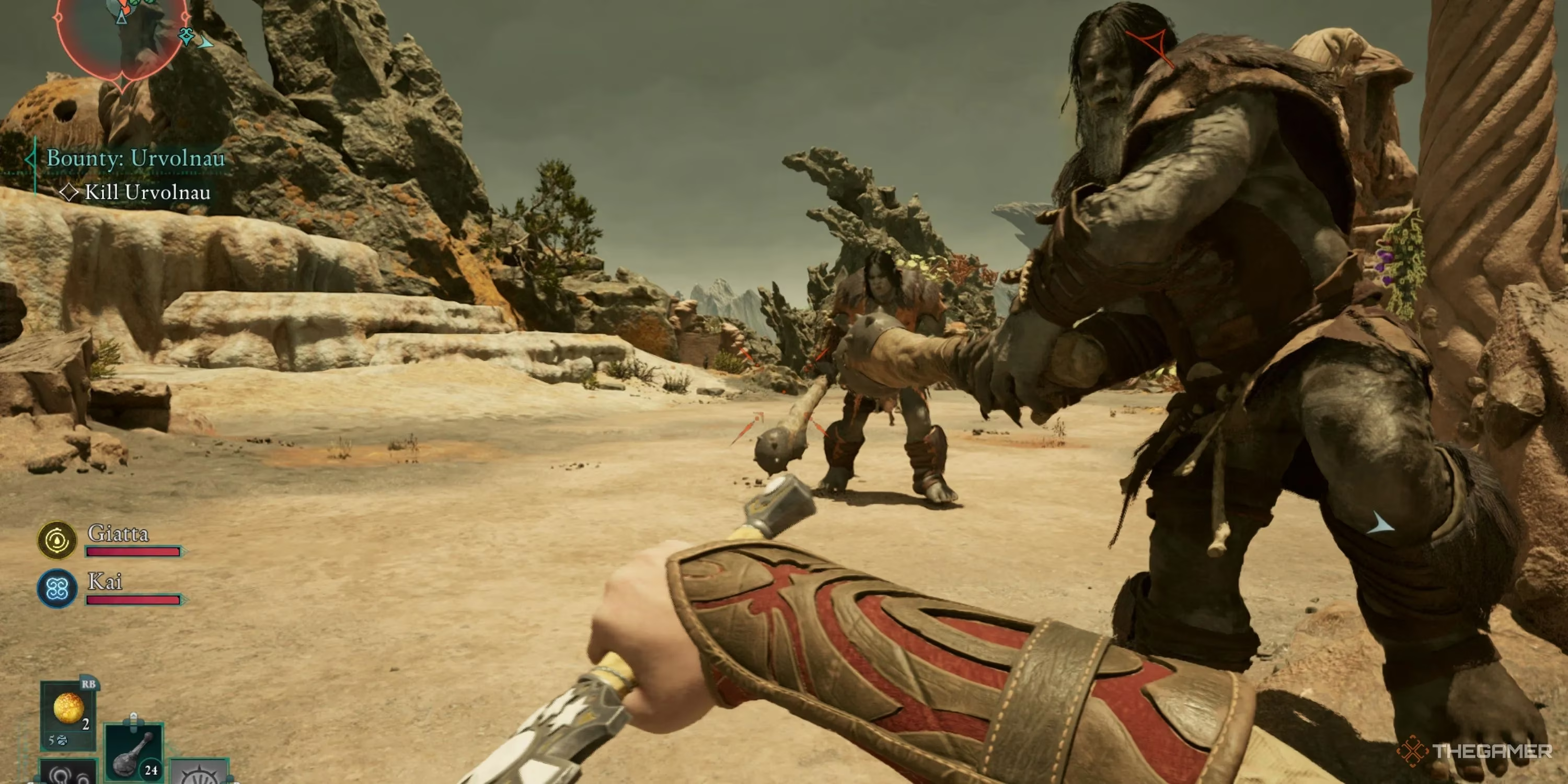
Avowed's combat receives mixed analysis. Some praise its foundation, which builds upon the first-person action-RPG template popularized by The Elder Scrolls series. Its magic system, in particular, is lauded for being visually spectacular and empowering, allowing players to "work miracles." The dodge mechanic is also noted as a clean, functional addition. However, this praise is often tempered by comparison to much older titles, framing Avowed's advancements as incremental rather than revolutionary. The core melee combat retains a familiar, somewhat imprecise "swing and see what you hit" feel, which can feel dated. The restrictive systems surrounding it—slow swapping, stamina management, and skill-gated basics—seem designed to control player power and enforce a specific pace. This creates a dissonance: the game provides powerful tools like massive swords and devastating spells, but then implements systems that make wielding them fluidly a late-game luxury. The question becomes whether this design represents thoughtful balance or unnecessary friction.
Comparative Analysis and Player Experience 📊
The table below summarizes the clash between Avowed's empowering elements and its restrictive mechanics:
| Empowering Elements 🚀 | Restrictive Mechanics 🔒 | Resulting Player Experience 😕 |
|---|---|---|
| Flexible, hybrid skill trees | Basic actions (parry, quick swap) locked behind skills | Feeling of purchasing completeness, not power |
| Spectacular, versatile magic system | Magic requires dual investment (find grimoire + skill point) | Redundant progression paths |
| Powerful weapon variety (swords, hammers, wands) | Extremely slow base weapon switching | Tactical flexibility punished, flow interrupted |
| Functional dodge mechanic | Stamina pool shared with attacks | Immobility after aggressive actions |
This design leads to a fragmented combat flow. Players may settle into a single, effective tactic—like wand sniping or heavy weapon swings—because blending styles is cumbersome. The promised fantasy of a versatile adventurer adapting to any threat is hampered by mechanical speed bumps. The Quick Switch skill, therefore, is not experienced as an exciting unlock but as a remedy for a persistent annoyance.
Conclusion: A System at Odds With Itself 🤔
In 2026, Avowed presents an intriguing but conflicted case study in action-RPG design. Its ambitious skill trees and magical systems offer genuine depth and the potential for creative builds. The art of blending Fighter resilience, Ranger precision, and Wizardly might is a compelling progression hook. Yet, this potential is consistently undercut by foundational mechanics that prioritize control over fluidity. The slow weapon switching is the most visceral example, but it is symptomatic of a broader philosophy where basic combat competency is treated as a reward rather than a starting point. The game gives players a big sword and spectacular spells, but makes the process of using them effectively feel like solving a puzzle of its own design constraints. For some, mastering these systems will be part of the charm. For others, it will feel like the game is fighting against the power fantasy it so vividly promises. Ultimately, Avowed's combat is a mixture of brilliant ideas and puzzling limitations, leaving players to navigate the space between the miracles they can cast and the basic actions they must patiently unlock.
Comments