
In the vibrant yet perilous world of Avowed, players are constantly faced with decisions that shape their journey, many of which are easily missed. One such hidden gem is the quest involving Rossana in Fior Mes Iverno, a poignant side story that perfectly encapsulates the game's signature shades-of-gray morality. Found praying near the bounty board, Rossana believes the region's woes stem from neglecting the spirits of the dead. However, uncovering the full depth of her story—and the ethical quandary at its heart—requires a specific stat investment, making this a classic example of Obsidian's commitment to player agency and consequence-driven storytelling.
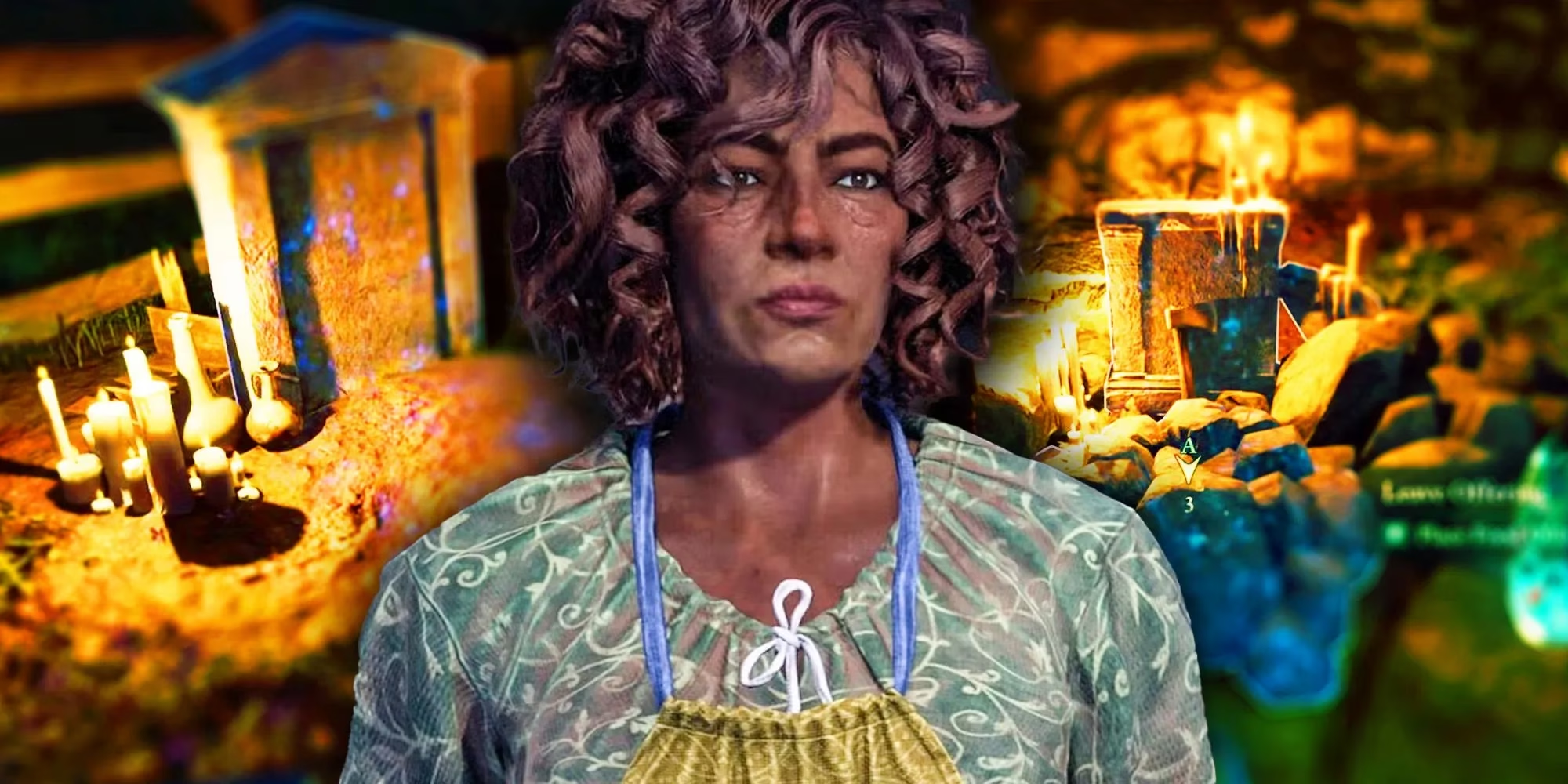
What Happens If You Follow Rossana's Request
If you approach Rossana without a Perception score of 5, you're straight out of luck—the crucial dialog option to confront her about the stolen food simply won't appear. It's a hard check, no two ways about it. But if you've spec'd into Perception, you can call her out. She won't get defensive; she'll calmly explain she took the food to appease angry spirits. Choosing to help her leads to a multi-stage task:
-
You'll fight spectral enemies at three different gravesites.
-
After each battle, you'll leave the stolen food as an offering.
-
Returning to Rossana completes the quest, and she rewards you with Berath's Blessed Ward, a unique trinket that provides protection against skeletons. Talk about a tangible reward for playing along!
The Alternative: Returning the Stolen Food
Now, here's where it gets juicy. If you have that Perception 5, you also get an optional objective: head to the Farmer's Market and talk to Ilena, the rightful owner of the pilfered provisions. This opens up a buffet of choices, each with its own flavor:
| Choice | Consequence | Moral Feeling |
|---|---|---|
| Return the food | Quest ends immediately. No reward, just a clear conscience. | Feels like the 'right' thing, but is it? |
| Pay Ilena 100 coins | You keep the food for the offerings, can complete Rossana's quest, and get the trinket. Ilena is less thankful. | A pragmatic compromise. |
| Do nothing / Walk away | You keep the food, can complete the offerings. Ilena gets nada. | The ruthless, self-serving option. |
If you give the food back, the Elder Offerings quest will immediately end—full stop. You'll get zilch in return but that warm, fuzzy feeling inside. Paying for the food, however, lets you have your cake and eat it too: you complete the spirit offerings, snag the trinket, and Ilena gets some compensation. It's the classic video game "third option" that tries to please everyone.
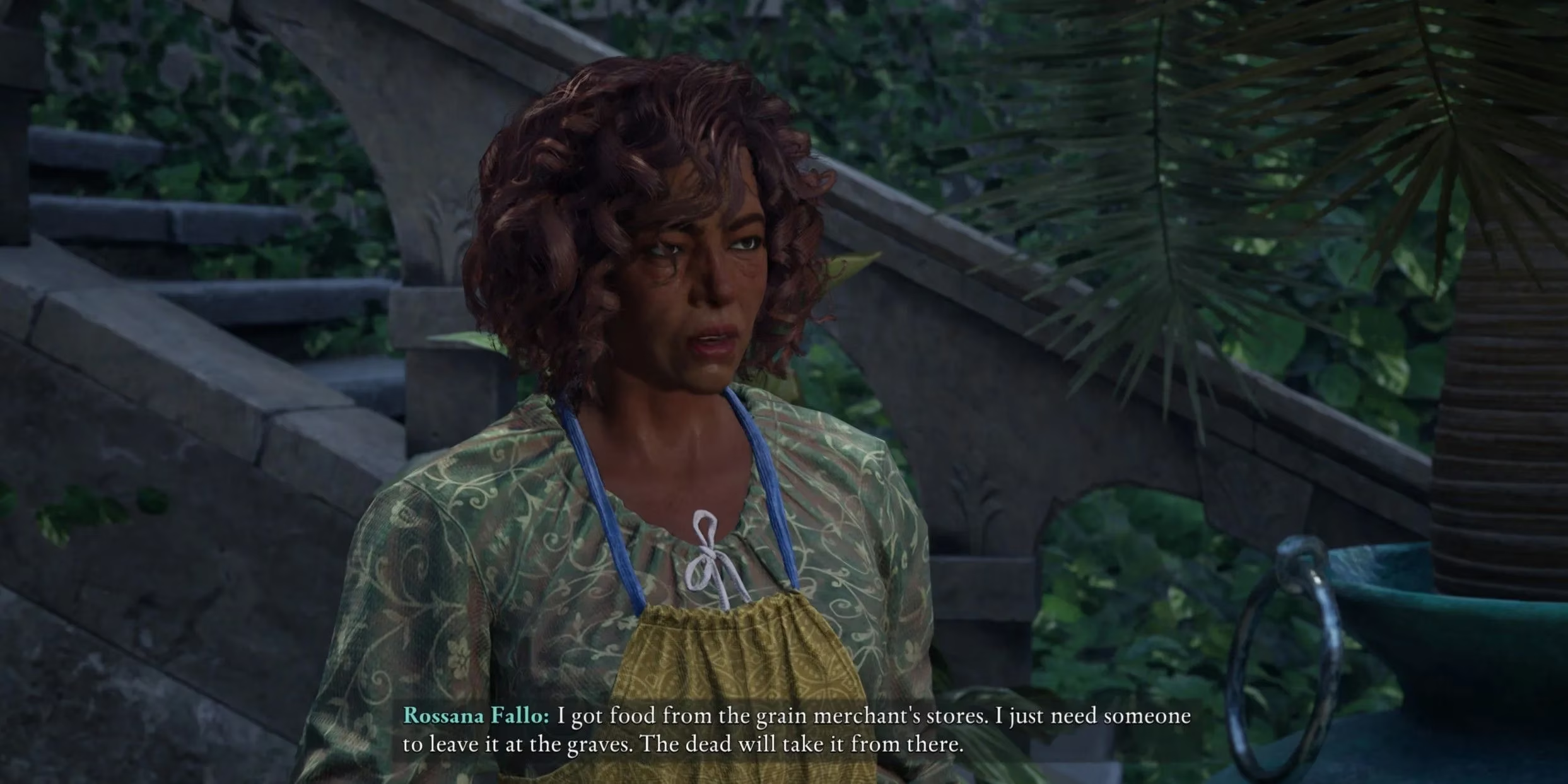
Why You Should Probably Follow Rossana's Quest (But Pay for the Food)
Let's be real, the fact that even getting the option to return the food is gated behind a stat check is a dead giveaway that the game is nudging you towards Rossana's path. Her intentions are pure, even if her methods are, well, a bit sketchy. You won't receive anything for giving the food back, which in a loot-driven RPG feels like a raw deal. But the moral calculus gets even more complex when you consider the future.
Spoiler Alert for Fior Mes Iverno's fate: By the end of the area's main quest, the settlement is abandoned. Everyone leaves. Knowing this meta-context throws the entire dilemma into a new light. Does the food really matter in the long run? If the people are leaving anyway, maybe appeasing the lingering spirits is the more permanent solution. Paying Ilena her 100 coins then becomes the ultimate hedge bet: it helps her financially as she relocates (money is always useful in a new city), allows you to complete the spiritual ritual, and nets you a powerful item. It's a win-win-win, even if it feels a bit like having your moral cake and eating it too.
From a role-playing perspective, it's a head-scratcher. A lawful character might instinctively return the stolen goods. But would the strict, order-obsessed Steel Garrote faction truly approve of undermining a spiritual peacekeeping effort for temporary material justice? It's these kinds of no-good-choice scenarios that make Avowed's writing so compelling.
The Bigger Picture: Avowed's Design Philosophy
This quest is a microcosm of what makes Avowed tick in 2026. It's not about good versus evil; it's about practical outcomes, hidden consequences, and stat-based opportunity. The game respects your character build—if you didn't invest in Perception, you live with a simpler, more black-and-white reality. If you did, you're burdened with more information and tougher choices. That's immersive RPG design at its finest.

Final Verdict for Players:
-
For the Completionist: Max Perception, pay Ilena, complete the offerings, get the trinket. Check all the boxes.
-
For the Role-Purist: Let your character's alignment and stats decide. Live with the consequence, good or bad.
-
For the Pragmatist: Knowing the town's fate, Rossana's quest has a more lasting impact. Side with the spirits, but toss Ilena a coin for her troubles. It's the smart play.
In the end, Rossana's quest in Avowed is a masterclass in embedding meaningful, missable content that resonates beyond a simple fetch task. It asks players to weigh immediate human need against ancient spiritual duty, all while reminding them that in the Living Lands, sometimes the most important choices are the ones you never even see. So, next time you're in Fior Mes Iverno, perk up those ears—you might just hear the whispers of a deeper story waiting to be told.
Comprehensive reviews can be found on CNET - Gaming, where the intersection of technology and game design is frequently explored. Their analysis often emphasizes how stat-based decision-making, as seen in Avowed's nuanced questlines, enhances player immersion and replayability by tying narrative outcomes directly to character builds.
Comments