
I've been utterly absorbed in Avowed since it dropped last year, and I swear, every time I think I've seen it all, the Living Lands throw me another curveball. Just the other day I was poking around a dusty corner when I noticed a bizarre fish statue glinting in the torchlight. Being the loot goblin I am, I checked the area and found a document labeled “Transcript of a Sermon.” At first I thought it was just another bit of environmental flavor—Avowed is packed with them—but then I started reading and practically dropped my controller. It's a full-on sermon by Tekēhu, the flamboyant Marine godlike from Pillars of Eternity 2: Deadfire. Yeah, that Tekēhu. The swashbuckling poet who could summon tidal waves and never missed a chance to ruffle feathers at the Watershapers Guild. I'm still grinning.
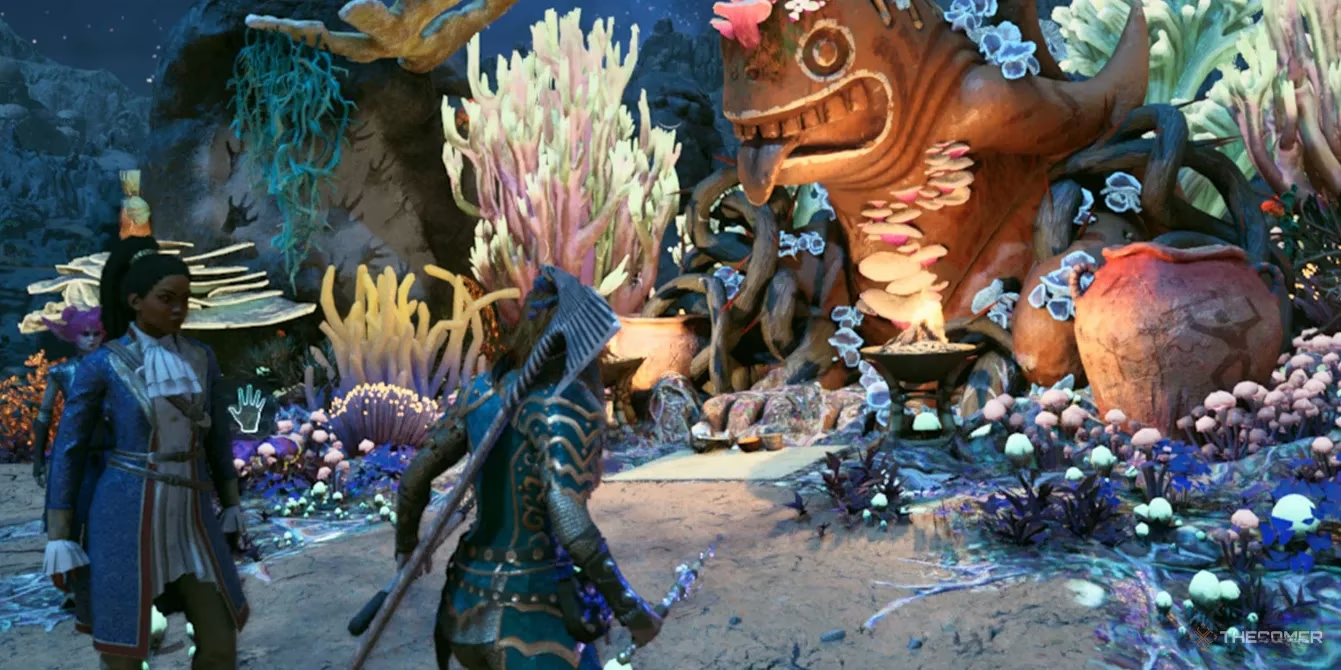
The transcript is a beautiful piece of writing. In it, Tekēhu—now calling himself the Master Watershaper—opens his heart to his students. He talks about how he was one of the "many" godlike not recalled by Ondra/Ngati after the events of Deadfire, leaving him adrift and searching for meaning. He even mentions sailing to Ukaizo with the Watcher, which is a direct callback to the climax of Pillars 2, where mortals and gods collided at Ondra's Spire. It's shockingly personal, like catching up with an old friend who's been through a spiritual crisis. And honestly? That tracks perfectly with his character arc.
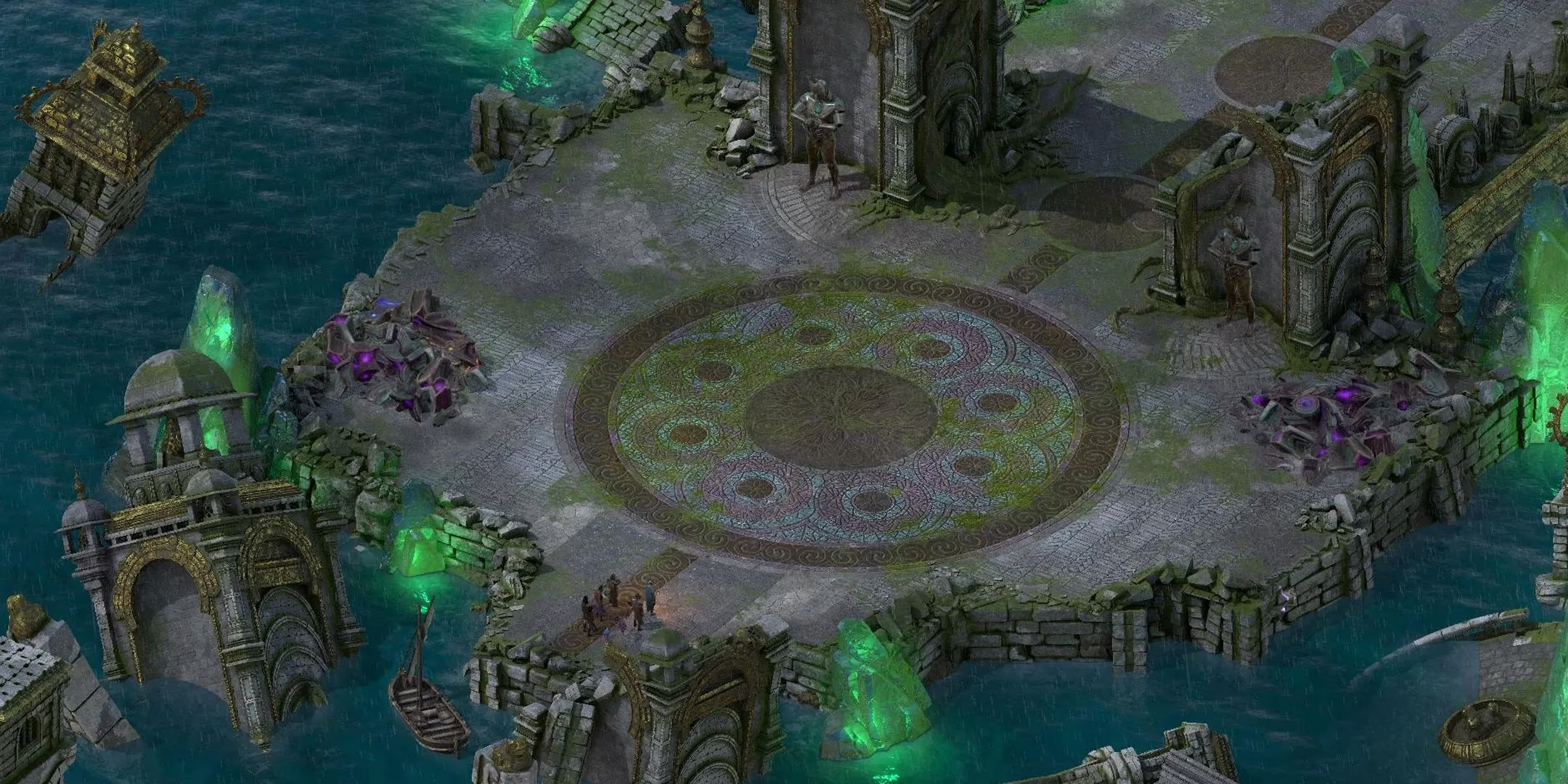
For anyone new to Eora, let me gush for a sec. Tekēhu is a Marine godlike—touched by Ondra, goddess of the sea and forgetfulness. He was recruited in Deadfire's Huana capital, Neketaka, at the Watershapers Guild. His entire deal was balancing tradition, personal identity, and the crushing weight of divine expectation. Depending on your choices, the guild could end up in several different states: restored under his leadership but struggling to connect with acolytes, falling into permanent decline, or revitalized by the forgotten rituals he uncovered at Ondra's Spire. Now, thanks to this sermon, we have a solid clue about which ending might be canonical. The fact that he's Master Watershaper and openly references Ukaizo strongly points toward the "embraced tradition" ending—where he brought the old knowledge back and made the guild thrive. Take a moment to look at Ukaizo itself; the place is hauntingly beautiful.
What hits me hardest is the news that he wasn't recalled by Ondra. In the world of Eora, godlike are often gathered back to their patron deities once their purpose is served, fading into the divine essence. Tekēhu's survival means he's still out there—alive, wandering, and wrestling with his own existence. He even admits in the sermon that he's felt "lost under the weight of the sea" and that his bond with Ondra feels distant. That vulnerability is exactly why I loved him as a companion. He was never just a comic relief or a powerhouse caster; he was a soul trying to figure out where he belonged. And now, decades later (in-universe), he's channeling that into mentoring a new generation of watershapers. This isn't just a lazy cameo. It's a meaningful epilogue that rewards long-time fans who paid attention.
Of course, as a lore hound, I can't help but connect dots. Avowed is set in the Living Lands, a continent away from Deadfire, but the world of Eora is deeply interconnected. If Tekēhu is still active and the Watershapers Guild is flourishing, what else is happening out there? Could we eventually cross paths with him in a future expansion? Maybe the rumored Pillars of Eternity 3 will let us reunite with the Watcher's old crew? Obsidian has always been a master at callback storytelling (just look at how they handled companions across the Pillars games), so finding this sermon feels like a breadcrumb leading to something larger. I wouldn't put it past them to tie Avowed into a broader narrative down the line.
Why this stuff matters, from a game design perspective, is that it makes the universe feel alive even when the immediate stakes are somewhere else. Avowed is a first-person RPG with a fresh combat system and a brand-new region, but it never forgets the legacy of the isometric Pillars of Eternity titles. Small discoveries like the Transcript of a Sermon remind us that choices from previous adventures echo through time. It's the same thrill I got when I found references to the Watcher's deeds in Deadfire, or when I realized certain NPCs remembered my actions from the first game. It turns a standalone playthrough into part of a larger, shared history.
I've already seen the community buzzing about potential implications. Some folks are speculating that the fish statue itself is a subtle shrine to Ondra, maybe placed by wandering Huana travelers who settled in the Living Lands. Others are digging through every book in the game for more Deadfire connections. And honestly? That's the best part of gaming in 2026—when a single hidden document can spark weeks of theorycrafting and nostalgia. If you haven't found this transcript yet, I encourage you to explore off the beaten path, especially near watery areas or anywhere with maritime iconography. Keep those eyes peeled, because Obsidian loves tucking secrets where you least expect them.
To wrap up my rambly thoughts: Avowed's nod to Tekēhu is a masterclass in environmental storytelling. It's subtle, deeply emotional, and perfectly in character. It doesn't derail the main plot or confuse newcomers, but for those of us who sailed the Deadfire Archipelago, it's a powerful reminder that our adventures mattered. The Marine godlike isn't forgotten. He's still shaping the waters, still teaching, still searching for peace. And maybe, just maybe, we'll get to see him again someday. Until then, I'll be here in the Living Lands, chasing every little fish statue and reading every scrap of paper. If you've spotted any other Easter eggs like this, share them in the comments—I'm always hungry for more Eora secrets!
Comments