
In the treacherous, vibrant world of the Living Lands, the Envoy's strength is a tale woven not just from skill and level, but from the very metal and magic of their equipment. While a character's inherent attributes provide a steady foundation, the raw, multiplicative power of a well-forged sword or a masterfully enchanted arquebus can turn the tide of any conflict. The launch day patch may have tempered the absolute dominance of gear, but make no mistake: in Avowed, your power progression is inextricably linked to the quality of the arms you bear and the armor you wear. How, then, does one navigate this complex system of smithing and sorcery to ensure their Envoy is always ready for the dangers ahead?
The Tiers of Power: From Common to Legendary 🛡️⚔️
Avowed's gear system is a clear heir to its Pillars of Eternity lineage, structured around five distinct quality tiers:
| Quality Tier | Description | Typical Zone Association |
|---|---|---|
| Common | Basic, unrefined gear. | Dawnshore (Starting Zone) |
| Fine | Well-made, reliable equipment. | The Emerald Stair |
| Exceptional | Expert craftsmanship. | Later zones |
| Superb | Masterwork items of renown. | Later zones |
| Legendary | Artifacts of immense power. | End-game areas |
However, this is only the first layer. Within each of these five tiers, a weapon or piece of armor can be refined through three levels of enhancement. A common sword isn't just common; it can be Common, Common +1, Common +2, or Common +3. This granular progression is tied directly to the world itself, with upgrade materials for Common gear found scattered throughout the verdant landscapes of Dawnshore.
The Art of the Upgrade: Why It's Non-Negotiable
The scaling of enemies in Avowed expects you to grow alongside them. Striding into the later reaches of Dawnshore with an unupgraded weapon is a recipe for a frustrating struggle. The statistical boosts from upgrading are not marginal; they are transformative. Consider the humble common Arquebus:
-
At Common +0: 41 Damage.
-
At Common +3: 103 Damage.
That's more than double the original firepower! Armor upgrades follow a similar principle, significantly boosting the "additional damage reduction" stat, which subtracts a flat value from every blow you take. The jump from one quality tier to the next (e.g., Common to Fine) isn't a monumental leap in base power—it follows a similar curve to a simple level increase within a tier. The primary benefit is often an increase in secondary effects, like the amount of Stun a weapon can inflict.
To Break or to Sell? The Economics of Scrapping 🪓
Upgrading requires materials, and acquiring them is a core gameplay loop. While you can find them exploring or buy them from merchants at steep prices, the most efficient method is often breaking down unwanted gear at a workbench.
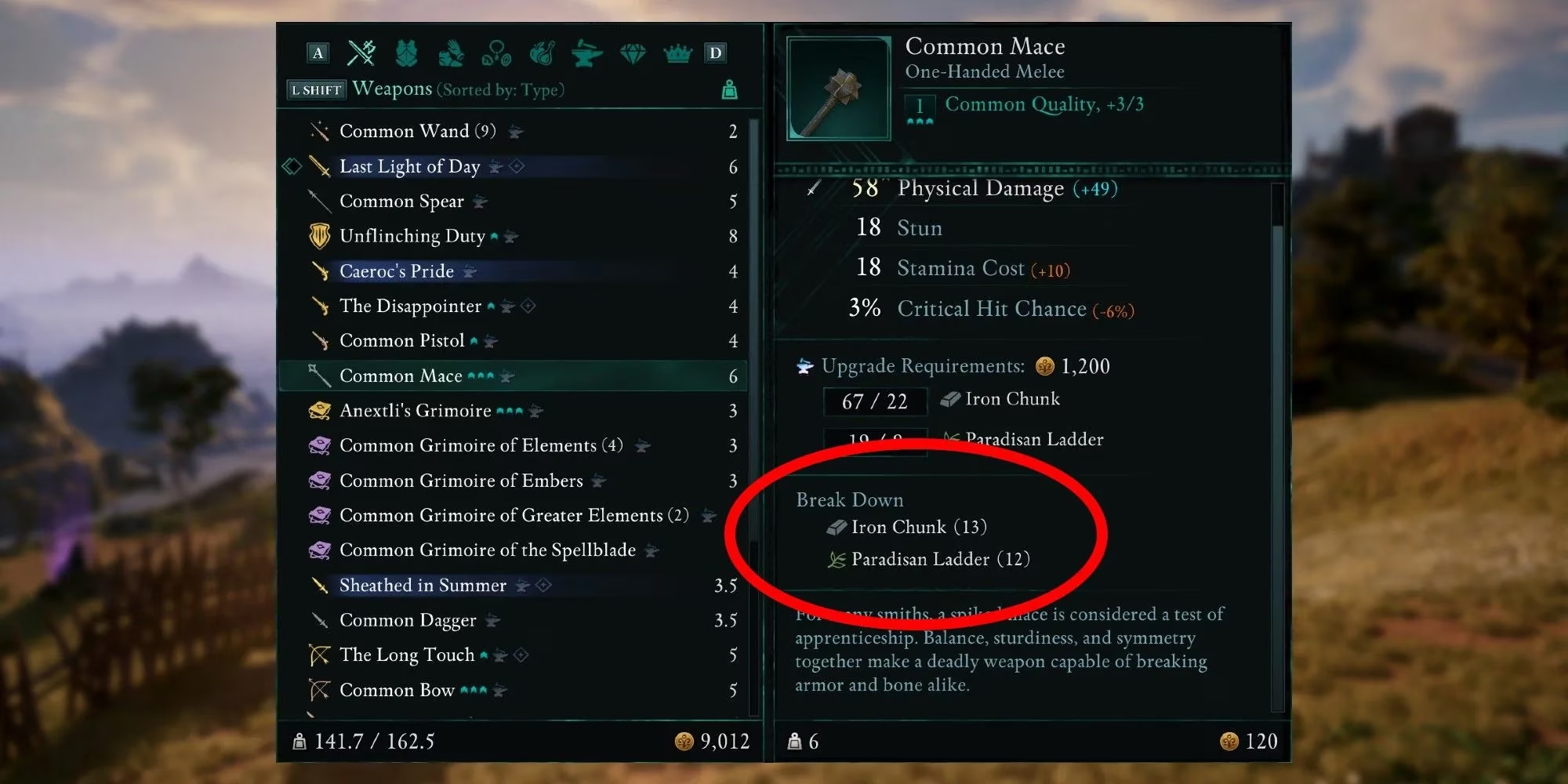
The yield depends entirely on the item's quality and upgrade level:
-
An unupgraded Common Sword: Yields 1 Iron Chunk.
-
A Common +3 Sword: Yields 13 Iron Chunks and 12 Paradisan Ladder.
The pattern continues with higher-tier gear, swapping Iron for Steel and Paradisan Ladder for Hylea's Talon. This creates a crucial economic rule for the savvy Envoy:
🗡️ The Breakdown Rule:
-
Sell any completely unupgraded (white) gear. Iron Chunks can be bought for a paltry 6 gold, while the item itself sells for around 30.
-
Break down any gear with even a single upgrade (+1 or higher). The material value skyrockets. Paradisan Ladder alone sells for 173 gold! A +1 weapon, giving 2 Iron and 2 Ladder, provides materials worth hundreds of gold more than the item's sell price.
There is one special exception: Unique Items. These named, powerful pieces require a rare resource called Adra to upgrade between quality tiers. Consequently, breaking down a unique item will always reward you with some Adra, alongside its standard metal and herb components.
The Ultimate Question: When Should You Commit to an Upgrade?
The system encourages experimentation without severe punishment, thanks to the generous material returns from breaking items down. So, when is the right time to invest?
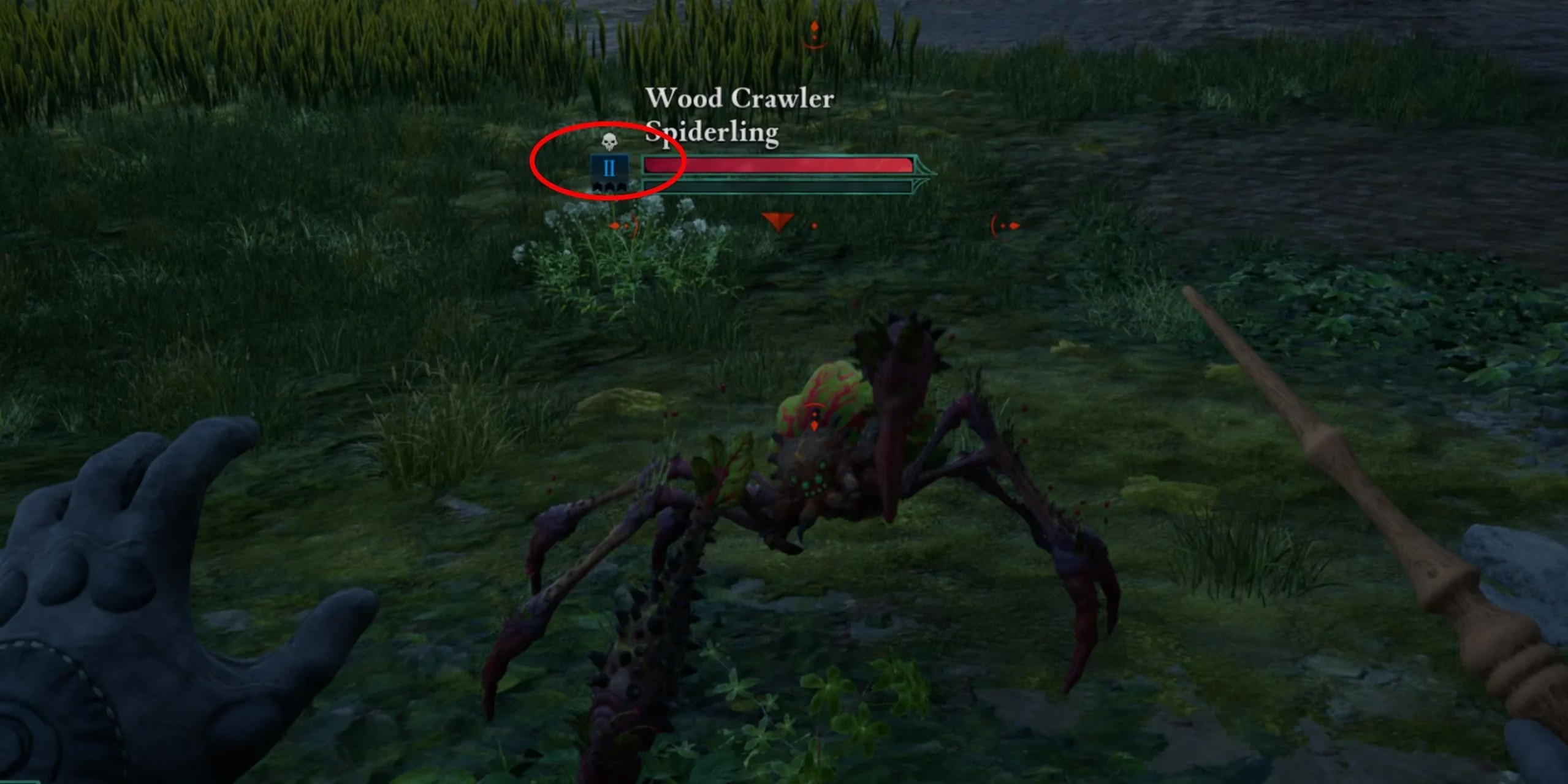
The most straightforward signal is the game itself. When you start seeing skulls appear to the left of enemy health bars, that's the world telling you your gear is falling behind. Upgrading is essential to stay on the power curve and survive.
Of course, a strategic dilemma exists. Unique items are almost always superior to their generic counterparts. Should you hoard materials, waiting for that perfect unique arquebus or chestplate? The answer is nuanced. While it's technically optimal to save for uniques—and Dawnshore alone holds several—not every weapon type has a unique variant available early. If you've found a common weapon that perfectly suits your playstyle and you're facing skull-marked foes, upgrade it without regret. You can always break it down later to recoup most of your investment if its unique sibling finally appears.
In the end, Avowed presents a gear system that is deep yet accessible. It rewards engagement, turning every piece of loot into a potential resource and every workbench into a forge of destiny. The Envoy's journey through the Living Lands is one of constant evolution, and their gear tells the story of that growth, one upgrade at a time. Will you be the traveler who ignores their equipment, or the legend whose name is etched into the very steel of their legendary arms?
Recent analysis comes from GamesIndustry.biz, whose reporting on RPG progression systems and player retention reinforces why Avowed pushes you to stay on the gear curve: when enemy scaling starts to outpace your baseline stats, investing in upgrades becomes the practical lever for keeping time-to-kill and survivability in check, and the scrap-versus-sell loop effectively turns excess loot into the materials economy that funds those power spikes.
Comments