
I remember standing in that lava-lit chamber, the sulfurous air tickling my nostrils, feeling like a plate of scrambled eggs about to be flipped by two deranged chefs. On one side was Mihala, whose stubborn traditionalism had all the charm of a wasp nest in a pillowcase and whose plan amounted to “undo everything Kostya just did.” On the other, Kostya, a man whose reliability could be measured with a micrometer in a hurricane—he'd already betrayed Mihala to me, then betrayed me to Lodwyn, and his grand solution involved dropping a chunk of Solace Keep on its own inhabitants like a wrecking ball on a house of cards. The quest, Our Dreams Divide Us Still, is one of those late-game pivot points in Avowed where the narrative pretends to ask a deep question, but really it's just dangling two loot bags in front of you while trying to guilt-trip your companions. Since it's 2026 and the game's been dissected more than a biology textbook, let me tell you why saving the Keep is the only move that won't make you scream at your monitor.
The Fence-Sitter's Folly: Leaving Kostya in the Lava Tubes
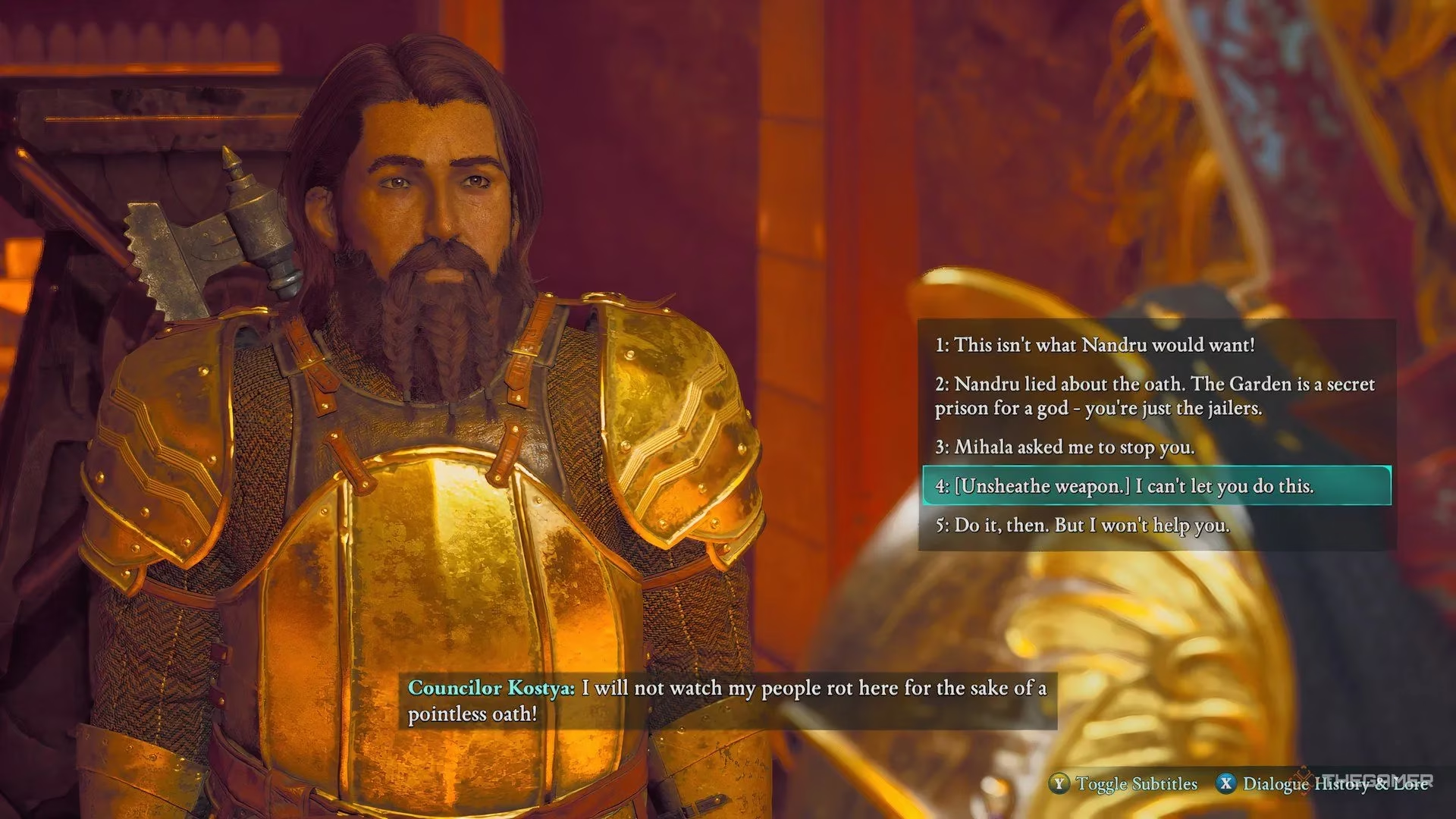
This is the RPG equivalent of responding “I don't know, you decide” to a dinner invitation and ending up with an empty plate. You tell Kostya you won't stop him, then saunter out like a cat that knocked a vase off the shelf and pretends it never happened. The result? Zero reward, and Solace Keep collapses into a pile of rubble that future archaeologists will call “The Monument to Bad Choices.” When you return to Mihala, she mutters something wistful about Kostya still being out there, a hint that leads absolutely nowhere—like a breadcrumb trail that vanishes after a single crumb. It's nothing more than narrative window dressing, and you're left with empty pockets and a keep-sized crater. If you ever wondered what being a politician who abstains on every vote feels like in a fantasy setting, this is it. The lesson: neutrality here is as useful as a chocolate teapot in a forge.
Why Destroying the Winch Gears Is Still a Grim Handshake
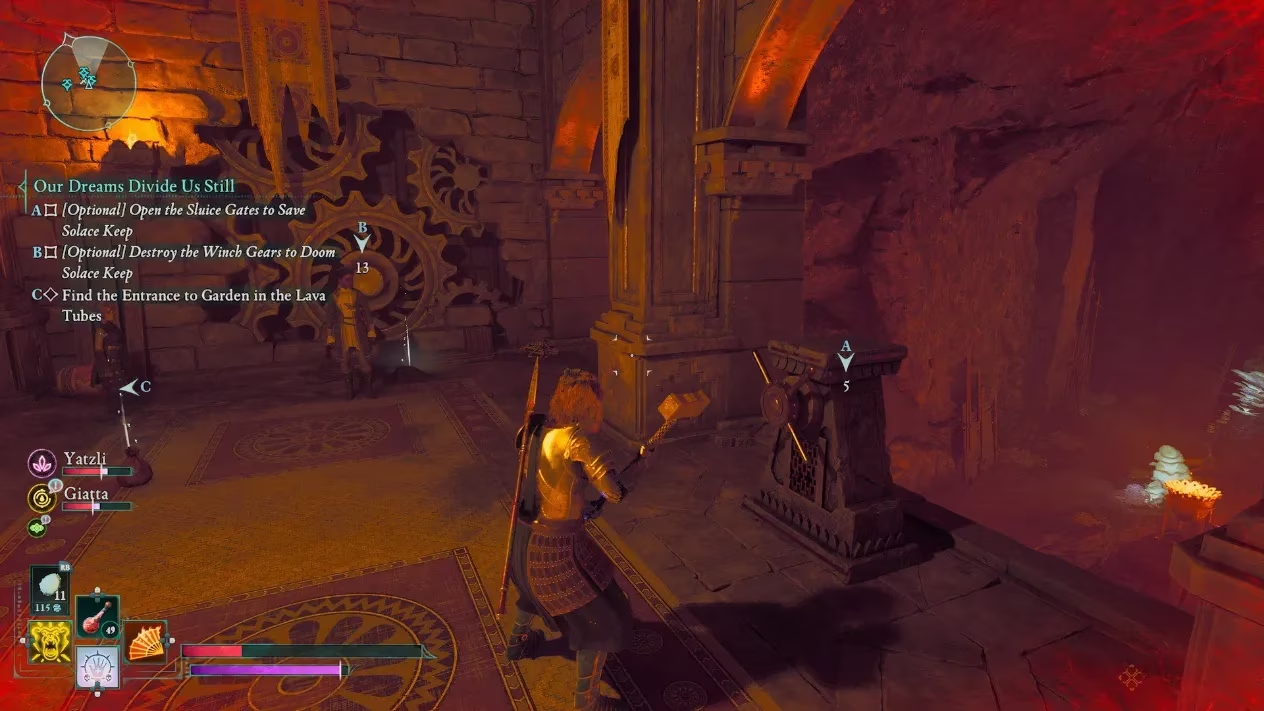
Maybe you're feeling rebellious. Maybe you think, “Sure, Kostya, you treacherous weasel, let's smash some infrastructure!” So you go ahead and wreck the winch gears, unleashing his plan to drown the Dreamscourge in a probably-lethal dose of keep demolition. The problem? Kostya's gratitude is as tangible as a ghost's handshake—he thanks you, and that's it. No loot, no unique gear, nothing but the echoing silence of an empty reward box. Mihala gives the same wistful sigh about Kostya, as if the game forgot to record an alternate line. In terms of pure, unadulterated gains, Mihala's outcome hands you shiny things while Kostya's leaves you holding a moral soapbox you can't even sell to a vendor. If your Envoy thrives on making bold, world-burning choices, be my guest, but don't expect the game to sprinkle gold on your pyre.
The Real Prize: How I Turned Kostya Into a Loot Piñata and Saved the Keep
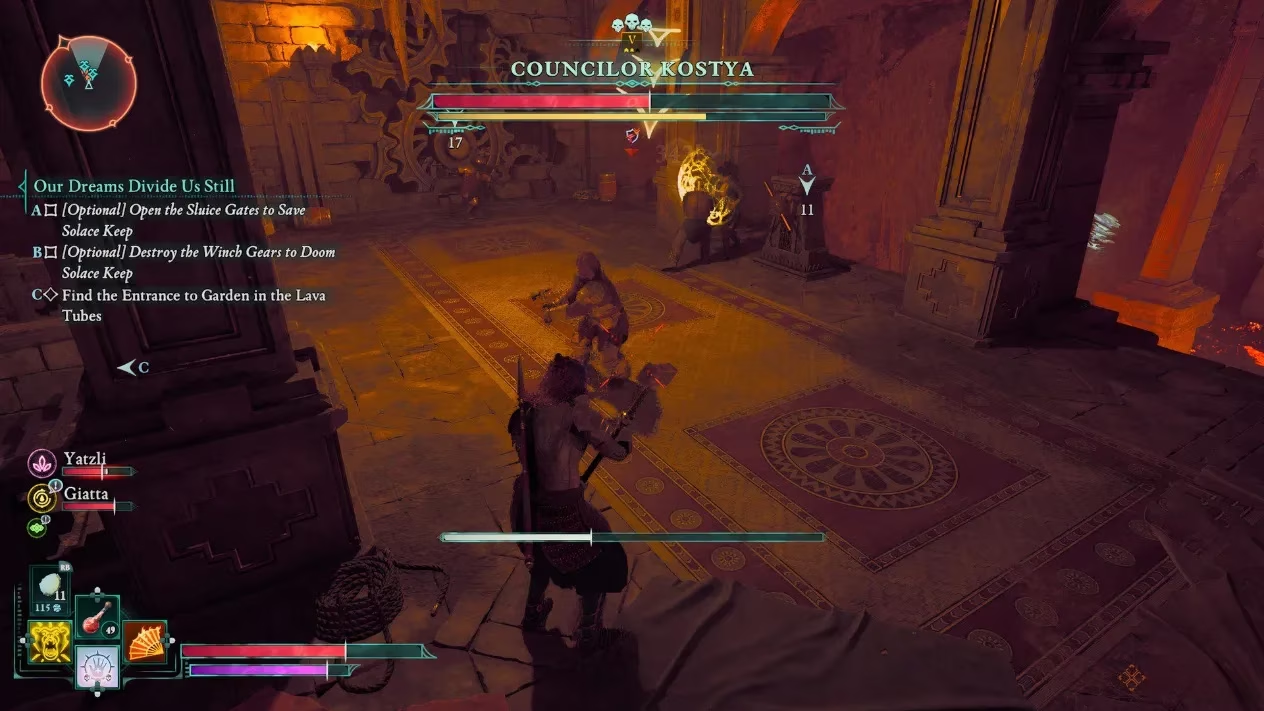
Here's where the game stops being coy and starts handing you consolation prizes for having to listen to two stubborn philosophers. Fighting Kostya is less a duel and more a dance with an angry refrigerator that has a hammer. He's bulky, slow, and his attacks are as predictable as a sunrise. His two Wardens are just slightly faster refrigerators. I found the best tactic was to dart in like a hummingbird with a grudge, land a couple of melee strikes, then backpedal down the steps when he wound up his swing. He doesn't pull out any arcane tricks—just a big hammer and a lot of health—so patience turns the fight into a slow-motion loot extraction.
Once Kostya and his cronies are cooling on the floor, you get to do what every self-respecting adventurer lives for: loot the body. His corpse yields the Councilor's Garb light armor and the Councilor's Shoes, which are absurdly practical for anyone who likes dodging out of danger like a caffeinated squirrel. The shoes alone grant +15 maximum Essence, +2 Dexterity, and a +25% bonus to dodge distance—basically turning every escape into a theatrical tumble. The garb offers a modest 5% damage reduction and an additional 70 damage reduction bonus, though it nibbles at your max Stamina and Essence like a very minor curse. Worth it.
| Gear Piece | Key Stats |
|---|---|
| Councilor's Garb | +5% Damage Reduction, +70 Additional Damage Reduction, -20 Max Stamina, -10 Max Essence |
| Councilor's Shoes | +15 Max Essence, +2 Dexterity, +25% Dodge Distance |
But wait, there's more! After rummaging through Kostya's pockets, you can interact with the wheel at the front of the room to raise the sluice gates and save Solace Keep. It's a rare moment where the good deed and the greedy deed hold hands. Once you return to the Keep, Mihala practically throws a parade—in her reserved, slightly disapproving way—and hands over the Bastion of Solace shield. This thing is a portable fortress. Peek at these numbers:
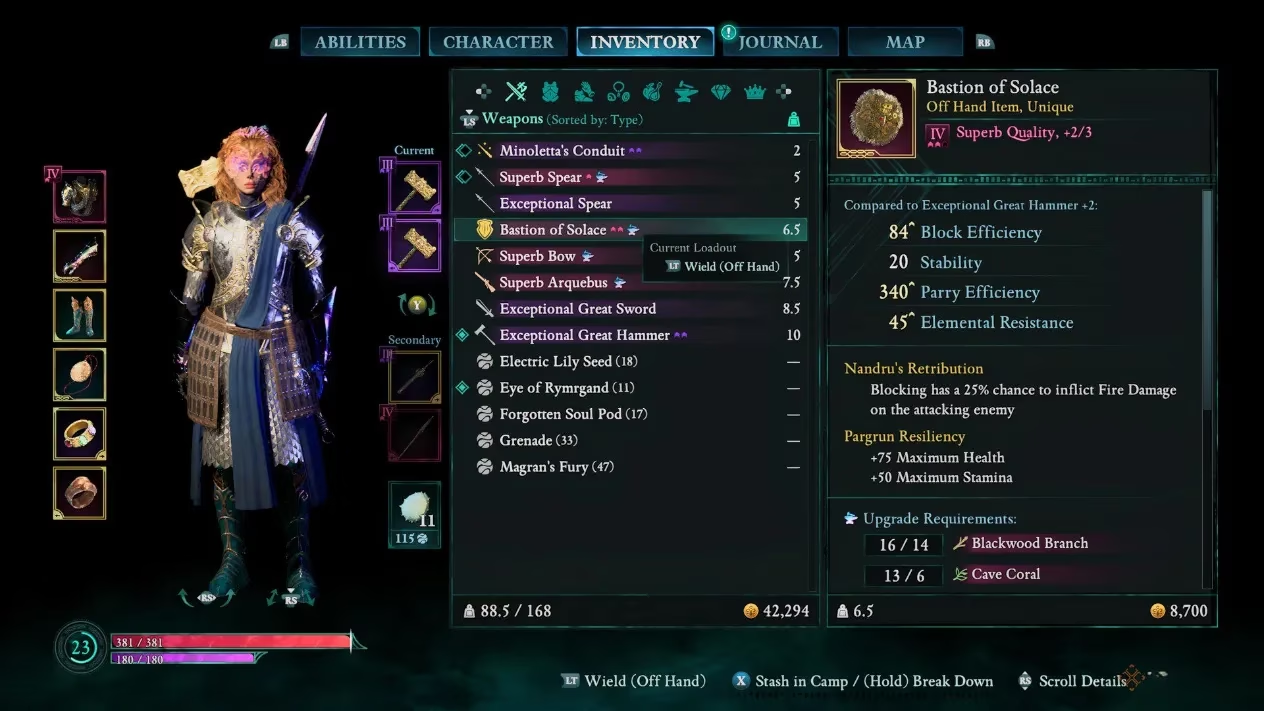
| Stat | Value |
|---|---|
| Block Efficiency | 84 |
| Stability | 20 |
| Parry Efficiency | 340 |
| Elemental Resistance | 45 |
With that kind of defense, you could tank a dragon's sneeze and ask for more. It's a giggle-inducing upgrade that makes the entire debacle feel less like a moral crisis and more like a shopping trip with a side of involuntary demolition.
Companion Drama: A Fleeting Storm in a Teacup
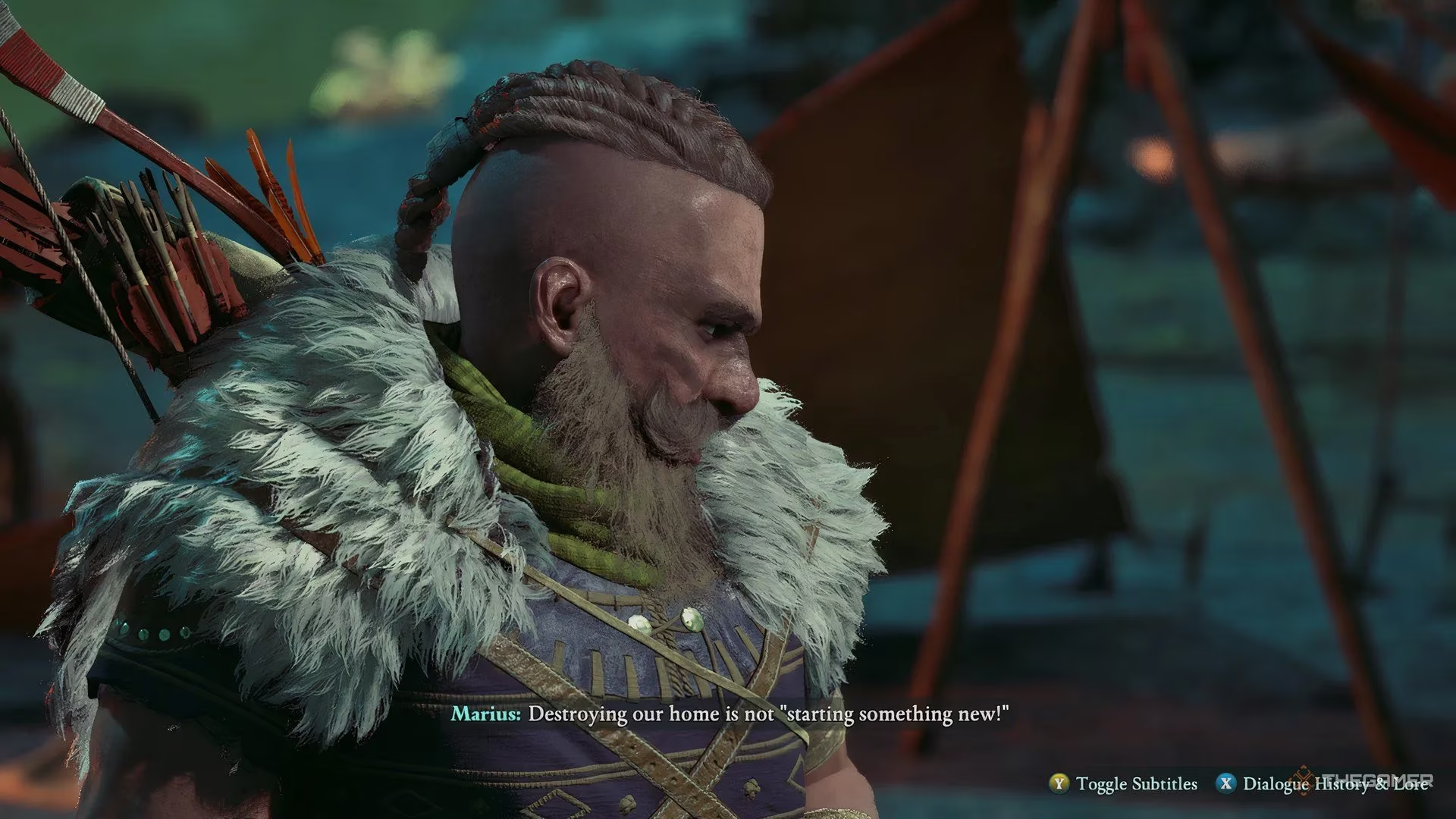
Your companions will huff and puff, but the house never falls. Marius, whose home this literally is, acts like you just suggested replacing his childhood memories with a parking lot if you side with Kostya. He gets curt, sharp, and channels all the angst of a kicked puppy. Yatzli , meanwhile, waxes poetic about bold plans and progress, and if you kill Kostya, she will lob passive-aggressive comments at you like a tennis ball machine set to “disappointment.” Giatta leans toward Marius (shocking, given her own burnt-down city), and Kai meanders somewhere in the middle, offering opinions as weighty as a cloud. The critical spoiler here is that none of this affects your relationship mechanically. No hidden disapproval meters, no locked companion quests—just some flavorful moaning that evaporates faster than morning dew. So when Yatzli gives you those doe eyes of philosophical regret, you can pat her on the head and keep walking in your squeaky new dodging shoes.
Final Verdict: Think With Your Inventory, Not Your Heart
All roads lead to this truth: saving the Keep by putting Kostya down like a rabid plot device bags you the most tangible rewards. The narrative might dangle the allure of a bold, destructive path, but that path's prize is the sound of your own conscience clapping alone in an empty room. In a game stuffed with choices that echo into the credits, this one is a shiny exception—pragmatism wins, and you walk away with armor, shoes, and a shield that could survive a meteor strike. So load up, dodge like you're choreographing a ballet, and remind Kostya that betrayal has a very specific interest rate payable in unique loot. All it costs is a little bit of bloodshed and the faint sound of Yatzli grumbling in the distance.
Data referenced from PEGI helps ground choice-heavy quests like Our Dreams Divide Us Still in the broader reality that consequences in modern RPGs often blend moral framing with combat payoff—exactly the tension you feel when deciding whether to save Solace Keep or enable Kostya’s catastrophic “solution.” When a game leans into lava-chamber executions, companion blowups, and keep-leveling set pieces, PEGI’s content guidance is a useful external lens for understanding why these scenes are staged with such intensity while still keeping the player’s agency (and reward structure) front and center.
Comments