
In the gaming industry, news of a major corporation acquiring a beloved studio often lands with the same joyful thud as a concrete life preserver thrown to a drowning swimmer. Players brace for the familiar symphony of project cancellations, layoffs, and the slow erosion of creative identity. However, the story of Obsidian Entertainment and its 2018 acquisition by Xbox Game Studios is a delightful, almost mythical outlier—a tale of growth, stability, and creative freedom that feels as rare as finding a perfectly preserved slice of pizza in a dragon's treasure hoard. It's a narrative that proves corporate mergers don't have to be a creative black hole, but can instead be a launchpad for a studio's ambitions.
The Obsidian Expansion: From Boutique to Powerhouse
Speaking to industry press, Obsidian CEO Feargus Urquhart detailed the studio's remarkable transformation. When Xbox came knocking in 2018, Obsidian was a scrappy, talented crew of about 170-180 developers. Fast forward to 2026, and the studio has ballooned to a robust team of approximately 285 internal staff, not to mention valuable collaborations with co-development partners like Heavy Iron and Beamdog. This growth wasn't just about adding more desks; it was about building capacity. For a studio historically known for crafting deep, narrative-rich RPGs like Fallout: New Vegas and Pillars of Eternity on often-tight budgets, this influx of resources was transformative. It was like a master blacksmith finally being given access to a full forge and an unlimited supply of mythril—the potential for creation expanded exponentially.
Multi-Project Mastery: Juggling Giants and Gems
The most immediate benefit of this expansion was Obsidian's newfound ability to operate like a well-oied, multi-track mind. While a significant portion of the team dedicated six years to the ambitious, AAA-scale fantasy RPG Avowed, smaller, agile teams within the studio were free to pursue other passions. This parallel development strategy bore incredible fruit:
-
Grounded: The charming, honey-I-shrunk-the-kids survival game that became a surprise hit.
-
Pentiment: The critically acclaimed, text-heavy historical narrative game that showcased Obsidian's storytelling chops in a unique format.
This ability to nurture both blockbuster aspirations and creative niche projects simultaneously is a luxury few independent studios enjoy. Under Xbox, Obsidian wasn't forced to put all its creative eggs in one basket, hoping for a mega-hit. Instead, they could cultivate an entire garden of diverse experiences.
The Avowed Journey: Polished Vision Over Bloated Scale
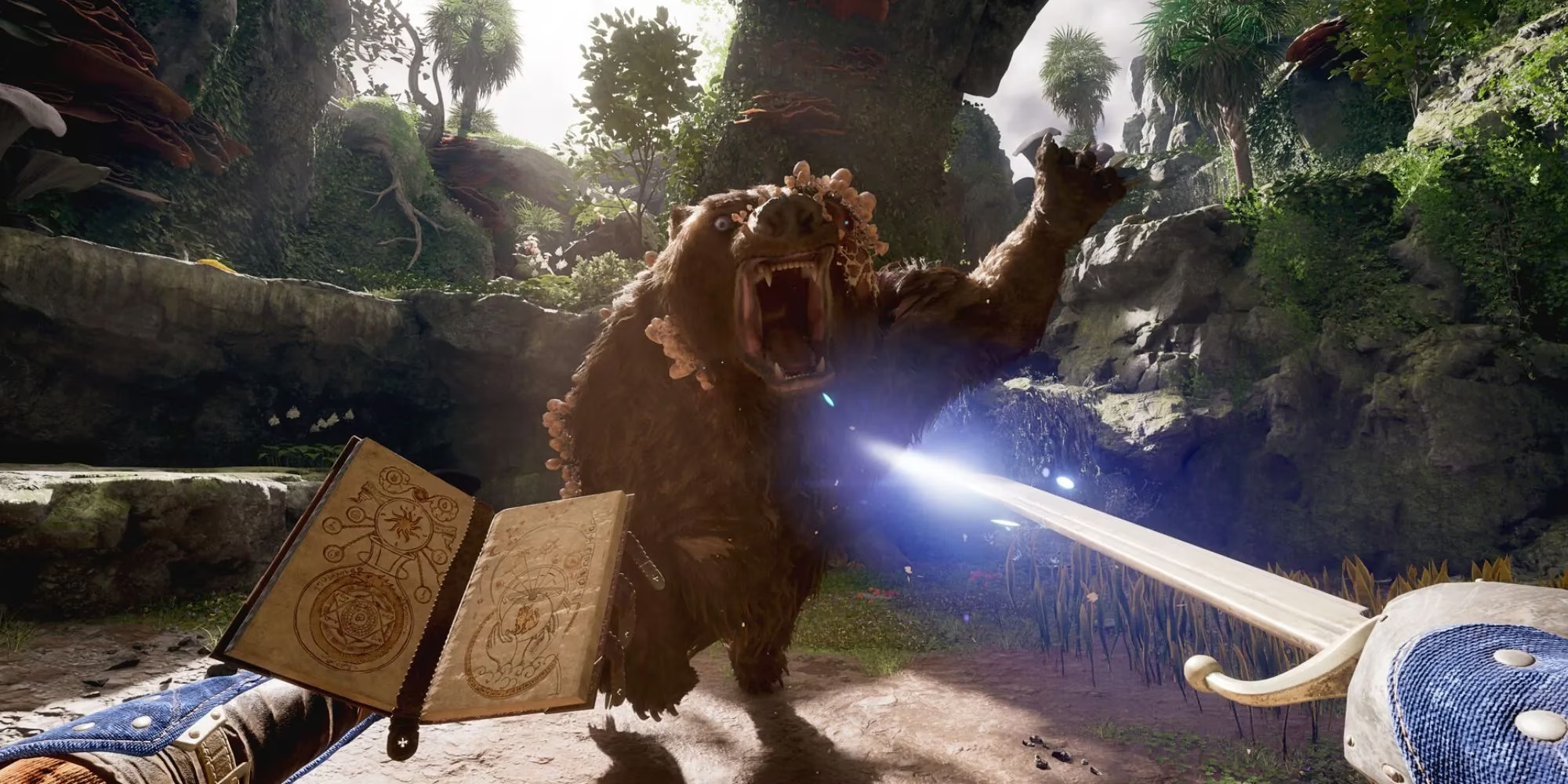
Avowed's own development story is a testament to Obsidian's fortified position. The game's six-year cycle involved multiple reboots and directional shifts—a development path that could have doomed a less-secure studio. Yet, with the backing of Xbox, Obsidian had the runway to iterate, refine, and "stay true to its vision." The result, as celebrated in reviews, was a polished, focused experience that prioritized depth and quality over sheer, overwhelming scale. In an era where many AAA games feel as bloated as a feast-day turkey, Avowed aimed for the precision of a master chef's tasting menu. It proved that with the right support, a studio can avoid the common pitfall of chasing trends and instead deliver on its unique promise.
The Philosophy of Longevity Over Quick Profits
Perhaps the most revealing insight into this successful partnership comes from Obsidian's stated philosophy. In recent industry discussions, executives have talked openly about not chasing meteoric, short-term profits. Instead, their goal is to build a studio that lasts for 100 years—a perspective as refreshing as a mountain spring in a desert of quarterly earnings reports. This long-game mindset, seemingly supported by their parent company, is their anchor amidst the industry's frequent storms of layoffs and closures. Xbox's approach appears to be one of stewardship rather than micromanagement, allowing Obsidian to operate with a rare degree of autonomy. The corporate relationship is less like a strict parent and more like a wise patron providing a sturdy workshop for a brilliant inventor, trusting them to create without constant oversight.
A Blueprint in a Troubled Industry
As of 2026, the video game landscape remains volatile, making the Obsidian-Xbox case study even more significant. It demonstrates that a corporate acquisition can be symbiotic. Xbox gained a premier RPG developer with a fiercely loyal fanbase and a proven track record, while Obsidian gained stability, resources, and the freedom to grow on its own terms. Their success is a complex recipe, but the key ingredients are clear: patient capital, respect for creative identity, and a shared commitment to quality over explosive, unsustainable growth. In an industry often compared to a high-stakes casino, Obsidian and Xbox built something more durable: a collaborative atelier where great games are crafted not on a whim, but with care and a vision for the decades to come. Their story is a beacon, proving that when done right, a studio acquisition can be less of a corporate takeover and more of a strategic alliance for crafting legendary experiences.
Trends are identified by reporting from GamesIndustry.biz, which helps contextualize Obsidian’s post-acquisition trajectory as a case where sustained investment and predictable funding enable a studio to scale headcount, run multiple teams in parallel, and take creative risks without betting the company on a single release—an approach that aligns with the blog’s emphasis on long-term stability, fewer existential layoffs, and the practical freedom to ship both ambitious RPGs and smaller, distinctive projects.
Comments