
In 2026, the debate over open-world versus linear game design feels more settled than ever, but not always satisfying. The triple-A landscape remains split between enormous maps that front-load player freedom and tightly scripted journeys that treat every step as a guided tour. Obsidian Entertainment’s Avowed, released in 2025, has become a useful case study for a middle route: open-zone design.
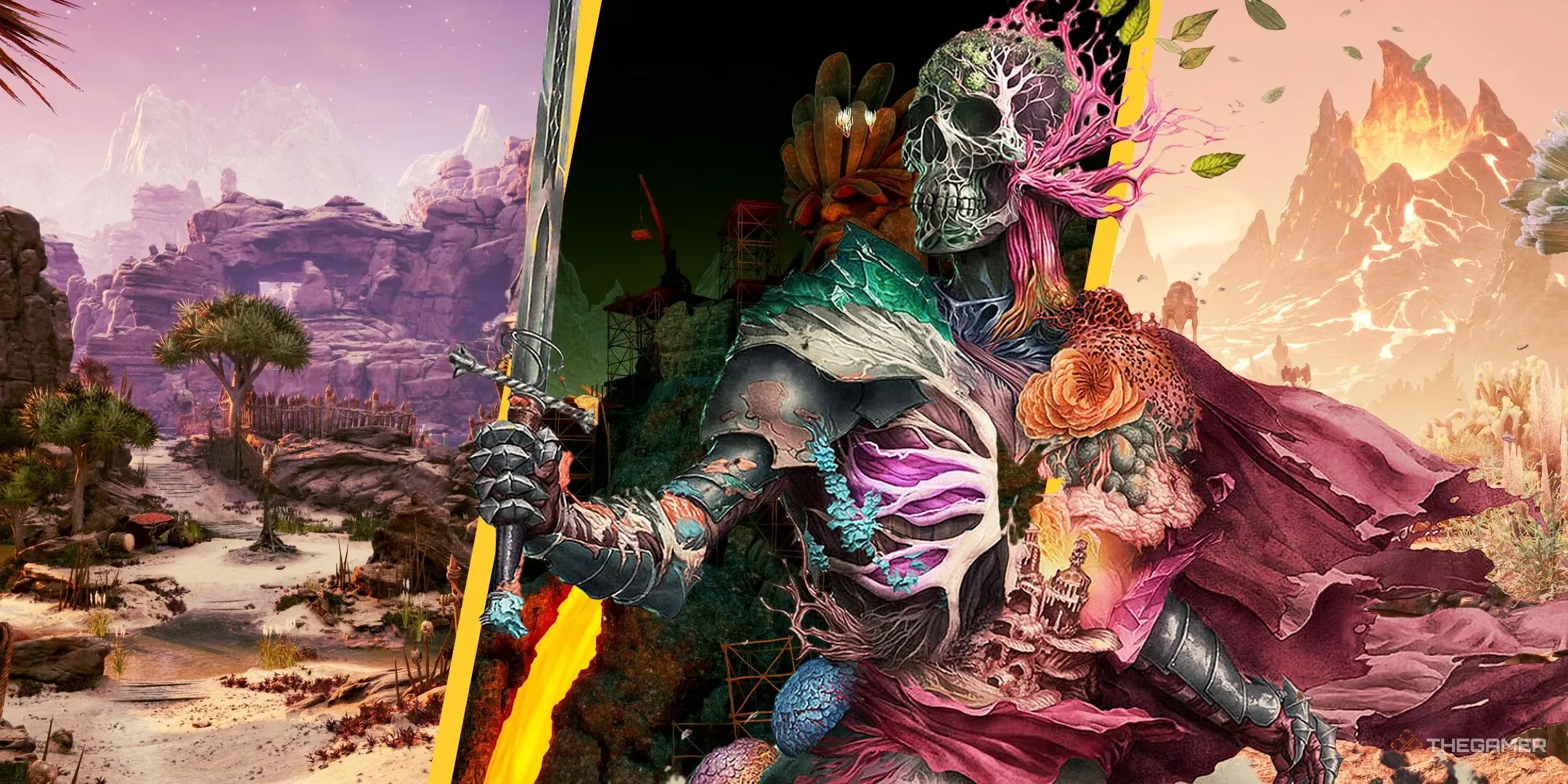
A Genre Caught Between Two Extremes
Post-Breath of the Wild, many open-world games give players access to huge swaths of content right at the start. But most are not as carefully crafted as Fallout 3 or Breath of the Wild. After the initial thrill, repetitive bandit camps and copy-pasted activities make the illusion wear thin. On the other end, modern linear games—Final Fantasy 16 and God of War Ragnarok, for example—are often so narrow that exploration becomes impossible. Levels are hallways connected to combat arenas, and the player rarely risks getting lost.
Why does Obsidian keep choosing a different path? The studio has returned to the open-zone format in The Outer Worlds and Avowed. Instead of one massive map, players get a large area to explore as they see fit. Once the critical story advances far enough, they move to the next zone and repeat the loop.
Pacing Is the Point
According to a post on Xbox Wire, pacing is the main reason for this structure. Narrative designer Kate Dollarhyde explained that sequential zones let the team know what core experience the player has just finished. She said:
"Having these zones that happen in sequence means we always know what content you’ve just come from on the critical path. Maybe not what side quests you’ve done, but we always know you’ve just had this [core] experience."
That knowledge lets designers tailor what happens next. Because the range of prior story options is more limited, a zone can offer more specific pacing, tone, and encounter design. In a fully open world, developers often have to account for players who arrive in an area after dozens of hours or after completely ignoring the main story. Open zones reduce that uncertainty without removing player agency inside each zone.
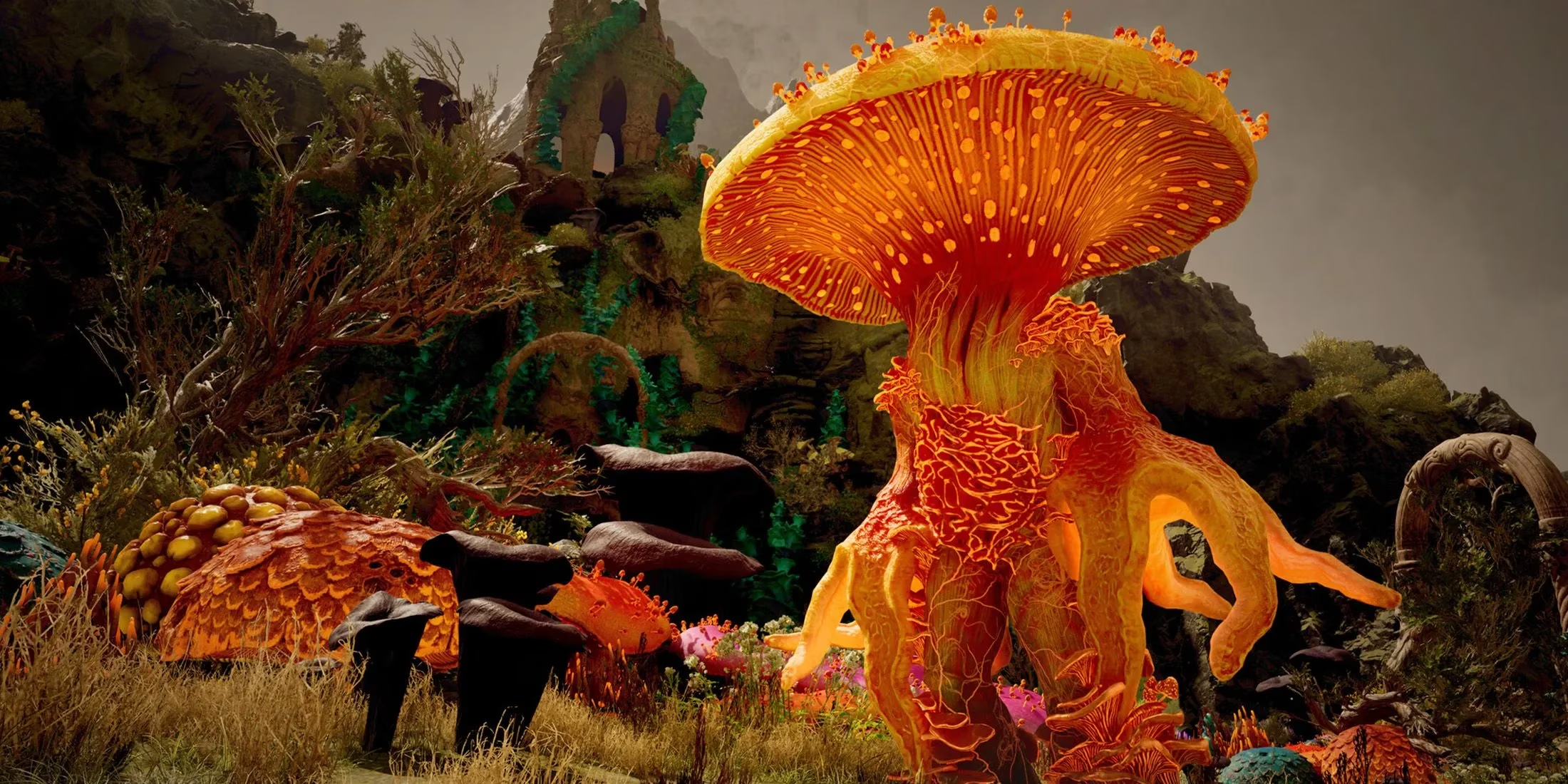
The Best of Both Worlds
An open zone can recreate the feeling of stepping out into the world more than once. The first time a player emerges from the vault in Fallout 3 or leaves the Shrine of Resurrection in Breath of the Wild is magical. Many open-world games cannot sustain that magic, but open zones can resurface it at each new region. In Vampire: The Masquerade - Bloodlines, spending hours in Santa Monica and then unlocking Downtown Los Angeles remains an exhilarating second beginning. Just as one area starts to feel exhausted, a new space appears.
Linear games, by contrast, can feel like a train on a track. The best linear adventures—Half-Life 2 and The Last of Us, for instance—leave some room to poke around and find moments off the beaten path. But even they rarely deliver the repeated sense of arrival that a well-structured zone system can provide.
Where Open Zones Succeed
A successful open-zone game makes each location feel designed rather than generated. Places are big but manageable. NPCs and side quests can primarily relate to one another inside the zone, creating meaningful local connections. The format also leaves room for mystery: some mountains are off-limits, some routes are blocked, and some secrets remain hidden until a later return. Open-world games often allow players to climb every mountain immediately, which can shrink a world’s sense of scale. Open zones can make restrictions feel like story progress rather than padding.
Other titles have tried variations of this structure with mixed results. Final Fantasy 7 Rebirth swings between open-world and linear modes, and the balance can feel uneven. Horizon Forbidden West is technically open-world but gates huge portions of the map behind story progress, which can make the early game feel like waiting for the real adventure to begin.
A Blueprint for 2026
Avowed’s open-zone approach is not perfect for every game, but it offers a clear blueprint. It protects pacing, supports authored storytelling, and still gives players room to wander. As more developers in 2026 search for alternatives to bloated maps and narrow hallways, Obsidian’s persistence with open zones may be the most practical compromise available.
| Design Style | Player Freedom | Pacing Control | Example Games |
|---|---|---|---|
| Open World | Very high across the whole map | Low | Breath of the Wild, Fallout 3 |
| Linear | Low, guided corridor | Very high | Final Fantasy 16, God of War Ragnarok |
| Open Zone | High within each contained region | High across sequential zones | Avowed, The Outer Worlds, Vampire: The Masquerade - Bloodlines |
Why does this matter in 2026? Because player expectations continue to shift. Audiences increasingly want authored stories without giving up the joy of exploration. A well-built open zone can deliver both, offering a fresh arrival point at each new chapter while preserving a manageable sense of place. Obsidian’s approach shows that the smartest design is not always the biggest map or the tightest corridor—it is a carefully measured middle path.
The following analysis references The Verge - Gaming for broader industry context on how modern AAA studios balance authored storytelling with player-led exploration. That perspective helps frame why Avowed’s open-zone structure resonates in 2026: it limits pacing uncertainty compared to fully open worlds while still avoiding the corridor-like rigidity of many linear blockbusters, making each new region feel like a deliberate “second beginning” rather than filler between cutscenes.
Comments