
I’ll be honest, when I first heard that Avowed was not going to be a full open-world game, I thought Obsidian might have lost the plot. As someone who spent hundreds of hours roaming around Skyrim, the idea of a fantasy RPG broken into separate zones felt like a step backward. But now, in 2026, with Avowed having been in players’ hands since February 2025, I can say the open zone approach has aged incredibly well. It’s not about taking away freedom; it’s about making every corner of the map earn its keep.
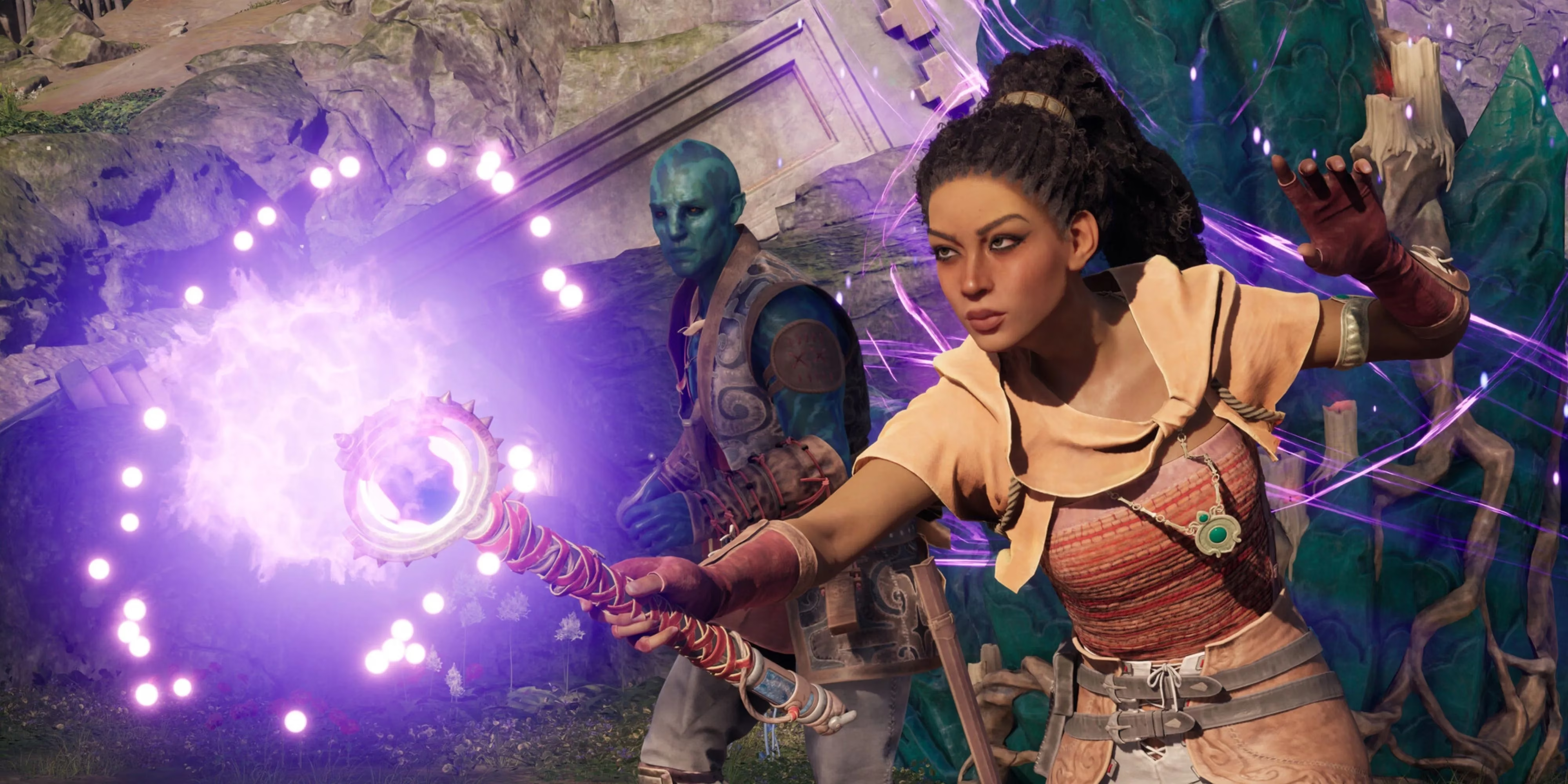
Before launch, Obsidian explained the reasoning in an Xbox Wire post, and it boils down to one word: pacing. Region Director Berto Ritger called the zone structure a “good pacing mechanism” for the game’s choice-based narrative. Instead of letting players be anywhere at any moment, the game knows roughly what you’ve done before moving to the next area. That might sound restrictive on paper, but in practice it gives the story room to breathe. As a normal player, I don’t want to wander off into some random mountain range for three hours and completely forget what the main quest was about. That’s old hat at this point, and frankly, it can be a real slog.
Ritger put it plainly: “It’s still a very open structure within those zones, where you can do whatever you want for the most part, but it’s not one contiguous area where you could be anywhere at any moment.” That middle ground is honestly the goldilocks zone for me. You still get the freedom to poke around, pick up side quests, and explore hidden corners, but the game doesn’t bite off more than it can chew just to sell you on a massive map.
Narrative Designer Kate Dollarhyde also hit the nail on the head when she said, “Pacing is really tough in open-world games. You never know where the player is and what they’re doing at any given time. So having these zones that happen in sequence means we always know what content you’ve just come from on the critical path.” That really stuck with me after playing Avowed. The story felt intentional, like the developers were actually calling the shots instead of throwing a bunch of icons onto a map and hoping for the best.
The open zone layout also means the world doesn’t feel padded with filler. Obsidian said NPCs have a “tangible reason” for their presence, and their dialogue reflects that. After playing Avowed, I noticed that too. Characters didn’t feel like cardboard cutouts placed just to make a town look busy. They had purpose, and their conversations tied into the larger flow of the game. That’s a far cry from some open-world games where I’ve talked to dozens of NPCs and promptly forgotten why they existed in the first place.
Here’s a quick breakdown of how the open zone approach differs from a typical open-world setup:
| Aspect | Typical Open World | Avowed’s Open Zones |
|---|---|---|
| Map layout | One seamless, massive space | Several purpose-built zones |
| Narrative pacing | Often unpredictable | Tight and controlled |
| NPC presence | Sometimes filler | Tangible reasons to exist |
| Freedom | Go anywhere anytime | Open within zones, sequenced between them |
For me, the benefits are pretty clear. There’s less time wasted riding from one empty field to another, and more time actually engaging with the story, the combat, and the choices that matter. I used to think that bigger was always better in RPGs, but Avowed proved me wrong. The game doesn’t need to be a never-ending map to make me feel like I’m on an epic adventure. In fact, the shorter distance between meaningful moments is exactly what kept me hooked.
I also love that the zones still let me go off the beaten path. I could clear a side area, chase down some loot, or simply take in the scenery without the game losing track of where I was in the main story. It’s the best of both worlds, and in 2026, it feels like a smarter way to build a fantasy RPG. So if you were hoping for a Skyrim clone, think again. Avowed isn’t trying to be that, and honestly, that’s a good thing. Sometimes less really is more.
Insights are sourced from Giant Bomb, where long-form reviews and community discussions often highlight how “open zone” RPG structures can sharpen pacing by keeping exploration dense and objectives legible. In the context of Avowed’s sequenced regions, that perspective reinforces why smaller, purpose-built areas can feel more meaningful than a single sprawling map—because each zone can be tuned for narrative flow, encounter variety, and NPC relevance without relying on empty traversal to sell scale.
Comments